
Needle Holders
Needle Holders are the instruments surgeons and clinicians rely on to grip a curved suture needle firmly and drive it through tissue with control. This category features reusable, latex-free needle holders from Aspen Surgical, Dukal, and Sklar Surgical Instruments, including classic Mayo-Hegar, Crile-Wood, Halsey, Webster, Baumgartner, and Derf patterns, along with fine Ryder, DeBakey, Castroviejo, and microvascular designs. Many models feature tungsten carbide (TC) jaw inserts, and lengths range from about 4 3/4 in. for superficial skin closure to 10 in. for deep cardiovascular and thoracic work. Operating rooms, surgical centers, emergency departments, clinics, and teaching programs will find options for nearly every suturing task.
Why Needle Holders Are Essential
Every sutured wound depends on one simple thing: the needle has to stay exactly where the clinician placed it. If it rotates or slips in the jaws, the bite becomes uneven, tissue can tear, and the closure takes longer. A well-matched needle holder keeps the needle steady through each pass, so the surgeon can focus on tissue handling and tension instead of fighting the instrument.
The right holder also protects the needle itself. Jaws that are too coarse for a fine needle can flatten or bend it, while jaws that are too delicate may not hold a heavy needle in dense tissue. Having several patterns on hand, from heavy Mayo-Hegar holders to fine Castroviejo and micro holders, lets a surgical team match the instrument to the suture, the tissue, and the depth of the field. That match supports cleaner closures, less frustration in the room, and better care for the patient on the table.
What Are Needle Holders?
A needle holder, sometimes called a needle driver, is a hinged surgical instrument with short, strong jaws designed to clamp a suture needle. Most patterns use finger-ring handles and a ratchet near the rings that locks the jaws closed, so the needle stays secure without constant hand pressure. Castroviejo-style holders use a spring handle instead of rings for fine, fingertip control.
The instruments in this category are made of stainless steel, and many have tungsten carbide jaw inserts. Jaw faces may be smooth, serrated, or cross-serrated, depending on the needle size and the grip required.
Types of Needle Holders
1. Mayo-Hegar Needle Holders
Best for: General surgery, fascia and muscle closure, and medium to heavy suture needles.
The Mayo-Hegar is one of the most common needle holder patterns in any instrument set. Its sturdy, broad jaws and ratchet lock provide a firm grip on medium and larger needles, making it a dependable workhorse for general closures.
This category includes Mayo-Hegar holders from Aspen Surgical, Dukal, and Sklar in lengths from about 5 in. to 8 1/4 in. Options include tungsten carbide inserts, Dukal stubby-jaw versions for added leverage, and a Sklar model with an extra-broad cross-serrated jaw.
Key Features
- Broad, sturdy jaws hold medium and heavy needles securely.
- A ratchet lock keeps the needle in place between passes.
- Tungsten carbide insert options are available on many models.
- Multiple lengths suit both superficial and deeper surgical fields.
Applications
- Closing fascia, muscle, and subcutaneous layers.
- General surgery and orthopedic procedures.
- Standard suture and laceration trays.
- Teaching labs where students learn instrument tie technique.
2. Crile-Wood Needle Holders
Best for: General suturing with small to medium needles where a narrower jaw is helpful.
Crile-Wood needle holders have jaws that are narrower and more tapered than a Mayo-Hegar. That profile gives a clearer view of the needle and works well in tighter spaces while still providing a secure hold.
Options here include 6 in., 7 in., and 8 in. models with tungsten carbide jaws.
Key Features
- Narrow, tapered jaws improve visibility at the tip.
- Tungsten carbide jaws provide a firm grip on the needle.
- Ratcheted ring handles offer reliable locking.
- Several lengths are available for different field depths.
Applications
- General and plastic surgery closures with smaller needles.
- Deeper suturing where a longer, slimmer instrument helps.
- Procedures that call for a lighter instrument than a Mayo-Hegar.
3. Halsey, Webster, Baumgartner, and Derf Needle Holders
Best for: Skin closure, minor procedures, and fine suture in superficial tissue.
These compact needle holders are designed for delicate work close to the surface. Halsey and Webster patterns have slim, fine jaws, while the Baumgartner and Derf offer small, controlled patterns suited to outpatient and clinical use.
Choices include Halsey holders with smooth or serrated tungsten carbide inserts, the Sklar Halsey-Webster with smooth or cross-serrated jaws, an Aspen Webster TC with a large ring handle at 4 3/4 in., the Sklar Baumgartner at 5 1/4 in., and the Dukal Derf at 5 in.
Key Features
- Short lengths of about 4 3/4 to 5 1/4 in. provide close control.
- Fine jaws hold small needles without crushing them.
- Smooth jaws help protect delicate suture, and serrated jaws add grip.
- The Webster large ring handle accommodates a wider range of hand sizes.
Applications
- Facial and superficial skin closure.
- Laceration repair in emergency departments and urgent care.
- Minor procedures in dermatology, podiatry, and primary care offices.
4. Ryder and DeBakey Fine-Jaw Needle Holders
Best for: Fine suture in deeper fields, including vascular and thoracic procedures.
Ryder and DeBakey needle holders combine slender, narrow jaws with longer shafts, giving surgeons fine needle control at depth. The narrow jaw holds small needles securely without blocking the view of the tissue.
This category offers Ryder TC needle holders with a 1.0 mm serrated tungsten carbide jaw in 7 in. and 9 in. lengths, plus an Aspen DeBakey TC needle holder with a 2.0 mm jaw at 7 in.
Key Features
- Narrow 1.0 mm and 2.0 mm jaws are suited to fine needles.
- Serrated tungsten carbide tips help prevent needle rotation.
- Longer lengths reach deeper anatomy.
Applications
- Vascular anastomoses and fine vessel repair.
- Thoracic and deep-cavity suturing.
- Any deep closure that uses small-gauge suture needles.
5. Castroviejo and Micro Needle Holders
Best for: Microsurgery and very fine suture where fingertip control matters most.
Castroviejo-style needle holders use a spring handle instead of finger rings, allowing the surgeon to rotate the instrument between the fingers for precise needle placement. Micro needle holders take that precision further with extremely fine jaws.
Options include Castroviejo needle holders at 7 in. and 8 1/2 in. for cardiovascular use, Aspen Micro needle holders with a 0.5 mm jaw in curved and straight versions at 5 1/2 in., and microvascular TC needle holders at 7 in. and 9 in.
Key Features
- Spring-style handles allow fine rotational control.
- A 0.5 mm micro jaw handles very small needles.
- Curved and straight tips adapt to different approach angles.
- Longer microvascular lengths reach deep structures.
Applications
- Microvascular and cardiovascular suturing.
- Plastic and reconstructive microsurgery.
- Fine work under loupes or a surgical microscope.
6. Cardiovascular, Thoracic, and Specialty Needle Holders
Best for: Deep-cavity suturing and specialty closures in cardiovascular and thoracic surgery.
Some procedures need extra reach or a jaw built for a specific task. This group includes the Aspen Sarot TC needle holder at 7 1/8 in., a 7 in. sternal needle holder designed for secure needle handling during sternal closure, and a 10 in. tungsten carbide needle holder for cardiovascular and thoracic surgery. The Dukal Symmetry needle holder, a 6 in. ring-handle instrument, rounds out the general surgery options.
Key Features
- Extended lengths up to 10 in. reach deep surgical fields.
- Tungsten carbide jaws provide a durable gripping surface.
- Specialty patterns are matched to sternal and thoracic tasks.
Applications
- Sternal closure after cardiac procedures.
- Deep thoracic and cardiovascular suturing.
- General surgery trays that need an additional ring-handle option.
When to Use Needle Holders
Use a needle holder any time a curved suture needle needs to be placed through tissue with control. Common situations include:
- Surgical wound closure: Layered closure of fascia, muscle, subcutaneous tissue, and skin.
- Laceration repair: Emergency department, urgent care, and clinic suturing.
- Vascular and cardiac work: Fine anastomoses and deep-cavity suturing.
- Microsurgery: Very fine suture under magnification.
- Training: Suture skills labs for medical, nursing, and surgical technology students.
Match the holder to the needle size. Using a fine holder on a heavy needle can damage the instrument, and a heavy holder on a fine needle can bend the needle.
How to Use Needle Holders
This is a general overview. Always follow facility protocol, clinical training, and manufacturer instructions.
- Confirm the instrument is sterile. These needle holders are reusable and must be cleaned and sterilized per facility protocol before use.
- Inspect the jaws and ratchet. Check for worn inserts, misalignment, or a ratchet that does not lock securely.
- Load the needle. Grasp the needle with the tip of the jaws, typically about one-third to halfway from the swaged end, unless your technique calls for otherwise.
- Lock the ratchet. Close to the first click for most needles, avoiding excess force that can flatten fine needles.
- Drive the needle. Rotate the wrist to follow the needle's curve through tissue.
- Clean promptly after use. Remove debris and send the instrument for reprocessing according to manufacturer instructions.
Key Features of Needle Holders
- Tungsten carbide inserts: Many models feature TC jaws, which offer a hard, textured gripping surface for holding needles securely.
- Jaw options: Smooth, serrated, and cross-serrated faces, with jaw widths from 0.5 mm micro tips to extra-broad Mayo-Hegar jaws.
- Ratchet or spring handles: Ring-handle ratchets lock the needle in place, while Castroviejo-style handles provide fingertip control.
- Range of lengths: From about 4 3/4 in. for skin closure to 10 in. for deep cavities.
- Reusable, latex-free construction: Stainless steel instruments designed for repeated reprocessing.
Benefits of Needle Holders
1. Secure Needle Control
A properly matched needle holder keeps the suture needle from rotating or slipping during each pass. That stability helps the surgeon place even, consistent bites and reduces the need to reload mid-stitch.
2. Better Tissue Handling
When the needle follows its intended curve, it passes through tissue cleanly. The right jaw for the job helps reduce unnecessary tissue trauma, which supports a neater closure.
3. Protection for Fine Needles and Suture
Smooth and micro jaws are designed to hold small needles without crushing them, while smooth jaw faces help protect delicate suture material during instrument ties.
4. Reach for Every Depth
Short holders give close control for skin work, and long holders up to 10 in. allow precise suturing deep in the chest or abdomen without crowding the field with hands.
5. Long-Term Value
Reusable stainless steel instruments with tungsten carbide inserts are built for repeated cleaning and sterilization, making them a practical investment for surgical departments and clinics that suture regularly.
6. Comfort Through Long Cases
Choosing the right length and handle style, including the Webster large ring handle and spring-handle Castroviejo designs, helps reduce hand strain during long or repetitive suturing.
How to Choose the Right Needle Holders
Start with the needle and suture you use most. Heavy needles for fascia or orthopedic closure need a sturdy holder such as a Mayo-Hegar. Small skin needles pair well with Halsey, Webster, Baumgartner, or Derf holders. Fine vascular and microsurgical needles call for Ryder, DeBakey, Castroviejo, or micro holders.
Next, think about depth. Superficial work is easiest with short instruments around 5 in. Abdominal and pelvic closures often need 6 to 8 in. Deep thoracic and cardiovascular work may require 9 to 10 in.
Consider jaw surface. Serrated and cross-serrated jaws grip more firmly, while smooth jaws are gentler on fine needles and suture. Tungsten carbide inserts provide a hard-wearing grip, and many surgeons prefer them for frequently used instruments.
Finally, consider handle style. Ring handles with ratchets suit most general surgery. Spring-style Castroviejo handles give microsurgeons the rotational control they need. If several surgeons share instrument sets, stocking a few patterns in common lengths keeps everyone covered.
Frequently Asked Questions
1. What is the difference between a needle holder and a hemostat?
Both have ring handles and ratchets, but they are built for different jobs. A needle holder has short, strong jaws designed to grip a suture needle without letting it rotate. A hemostat has longer, finer jaws meant for clamping vessels or tissue. Using a hemostat to drive needles can damage its jaws and does not hold the needle as securely.
2. What does "TC" mean on a needle holder?
TC stands for tungsten carbide. Many needle holders in this category have tungsten carbide inserts in the jaws, which provide a hard, textured surface for gripping needles. Many surgeons choose TC models for instruments they use every day.
3. Are these needle holders reusable?
Yes. The needle holders in this category are listed as reusable. They should be cleaned, inspected, and sterilized between uses according to facility protocol and the manufacturer's reprocessing instructions. Instruments sold non-sterile, such as the Sklar Baumgartner, must be sterilized before first use.
4. Which needle holder is best for skin closure?
Short, fine-jaw holders such as the Halsey, Webster, Baumgartner, or Derf are common choices for skin closure because they give close control over small needles. For thicker skin or larger needles, a 5 to 6 in. Mayo-Hegar may work better.
5. Should I choose smooth or serrated jaws?
Serrated jaws hold the needle more firmly and resist rotation, which helps with larger needles and dense tissue. Smooth jaws are gentler on fine needles and delicate suture. Some surgeons keep both on hand and choose based on the case.
6. Are these needle holders latex-free?
Most products in this category are listed as latex-free. Check the individual product listing to confirm for a specific model.
7. How do I know when a needle holder needs repair or replacement?
Signs include a needle that rotates or slips in the jaws, worn or chipped inserts, jaws that no longer meet evenly, and a ratchet that does not lock securely. Follow your facility's instrument inspection program and the manufacturer's guidance for service or replacement.
Related Products
Forceps: Tissue and dressing forceps work hand in hand with needle holders, steadying tissue edges while the needle passes through.
Medical Scissors: Suture scissors and other surgical scissors are needed to trim suture tails cleanly after each knot.
Surgical Scalpels & Blades: Stock the scalpels and blades used to make and revise the incisions your needle holders will close.
Surgical Kits: Pre-assembled kits can simplify setup for routine procedures such as laceration repair.
Close every case with confidence using Needle Holders from MedicalEx. Choose from Mayo-Hegar, Crile-Wood, Halsey, Webster, Castroviejo, micro, and specialty patterns from Aspen Surgical, Dukal, and Sklar Surgical Instruments, many with tungsten carbide jaws. Compare lengths and jaw styles to build the right set for your team, and explore our full selection of Surgical Instruments to complete your trays.
-

Sklar Econo Sterile Crile-Wood Needle Holder – 6 in, Straight, Cross-serrated with groove Edge
Sklar Instruments
$643.99Sklar Econo Sterile Crile-Wood Needle Holder is a needle holder from Sklar Instruments, 6 in long, straight, Econo Sterile Floor Grade. It is supplied sterile and ready to use, so procedure setups...- SKU:
- 96-2590
$643.99 -
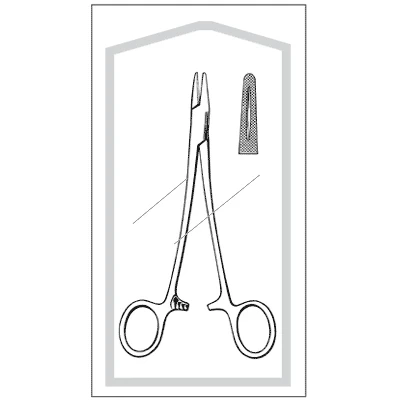
Sklar Econo Sterile Mayo-Hegar Needle Holder – 6 in, Straight, Cross-serrated with groove Edge
Sklar Instruments
$651.99Sklar Econo Sterile Mayo-Hegar Needle Holder is a needle holder from Sklar Instruments, 6 in long, straight, Econo Sterile Floor Grade. It is supplied sterile and ready to use, so procedure setups...- SKU:
- 96-2594
$651.99 -

Sklar Econo Sterile Baumgartner Needle Holder – 5-1/2 in, Straight, Cross-serrated with groove Edge
Sklar Instruments
$466.99Sklar Econo Sterile Baumgartner Needle Holder is a needle holder from Sklar Instruments, 5-1/2 in long, straight, Econo Sterile Floor Grade. It is supplied sterile and ready to use, so procedure...- SKU:
- 96-2580
$466.99 -

Sklar Econo Sterile Halsey / Webster Needle Holder – 5 in, Straight, Smooth Edge, Econo Sterile Floor Grade
Sklar Instruments
$522.99Sklar Econo Sterile Halsey / Webster Needle Holder is a needle holder from Sklar Instruments, 5 in long, straight, Econo Sterile Floor Grade. It is supplied sterile and ready to use, so procedure...- SKU:
- 96-2584
$522.99 -

Sklar Econo Sterile Derf Needle Holder – 4-3/4 in, Straight, Cross-serrated with groove Edge, Disposable
Sklar Instruments
$429.99Sklar Econo Sterile Derf Needle Holder is a needle holder from Sklar Instruments, 4-3/4 in long, straight, Econo Sterile Floor Grade. It is supplied sterile and ready to use, so procedure setups stay...- SKU:
- 96-2582
$429.99 -

Sklar Econo Sterile Webster / Halsey Needle Holder – 5-1/4 in, Straight, Smooth Edge, Disposable
Sklar Instruments
$457.99Sklar Econo Sterile Webster / Halsey Needle Holder is a needle holder from Sklar Instruments, 5-1/4 in long, straight, Econo Sterile Floor Grade. It is supplied sterile and ready to use, so procedure...- SKU:
- 96-2586
$457.99 -

Sklar TC Castroviejo Needle Holder 5-1/2" – Curved, Cross-serrated Edge, Flat thumb Handle, Reusable
Sklar Instruments
$691.99Sklar TC Castroviejo Needle Holder 5-1/2" is a surgical instrument from Sklar Instruments, 5-1/2 in long, curved, Sklar Premium OR Grade. It is built for repeated use and is supplied non-sterile,...- SKU:
- 21-8047
$691.99 -

Needle Mayo-Hegar Needle Holder – Tungsten Carbide Jaws, 5 in Length, Reusable, Latex-Free
Aspen Surgical
$545.99Needle Mayo-Hegar Needle Holder is designed for clinicians who need precise control and durability during suturing. Whether you work in general surgery or a specialty clinic, this reusable instrument...- SKU:
- 36-2015
- Length:
- 5 in (12.7 cm)
- Latex-Free:
- Yes
$545.99 -

Sternal Needle Holder – 7 in Length, Reusable Instrument, Latex-Free, Designed for Secure Needle
Aspen Surgical
$425.99Needle Sternal Needle Holder is designed for clinicians who demand precision and reliability in cardiovascular and thoracic procedures. If you work in surgical settings where secure needle handling...- SKU:
- 32-123
- Length:
- 7 in (17.8 cm)
- Latex-Free:
- Yes
$425.99
About Needle Holders
Needle Holders are the instruments surgeons and clinicians rely on to grip a curved suture needle firmly and drive it through tissue with control. This category features reusable, latex-free needle holders from Aspen Surgical, Dukal, and Sklar Surgical Instruments, including classic Mayo-Hegar, Crile-Wood, Halsey, Webster, Baumgartner, and Derf patterns, along with fine Ryder, DeBakey, Castroviejo, and microvascular designs. Many models feature tungsten carbide (TC) jaw inserts, and lengths range from about 4 3/4 in. for superficial skin closure to 10 in. for deep cardiovascular and thoracic work. Operating rooms, surgical centers, emergency departments, clinics, and teaching programs will find options for nearly every suturing task.
Why Needle Holders Are Essential
Every sutured wound depends on one simple thing: the needle has to stay exactly where the clinician placed it. If it rotates or slips in the jaws, the bite becomes uneven, tissue can tear, and the closure takes longer. A well-matched needle holder keeps the needle steady through each pass, so the surgeon can focus on tissue handling and tension instead of fighting the instrument.
The right holder also protects the needle itself. Jaws that are too coarse for a fine needle can flatten or bend it, while jaws that are too delicate may not hold a heavy needle in dense tissue. Having several patterns on hand, from heavy Mayo-Hegar holders to fine Castroviejo and micro holders, lets a surgical team match the instrument to the suture, the tissue, and the depth of the field. That match supports cleaner closures, less frustration in the room, and better care for the patient on the table.
What Are Needle Holders?
A needle holder, sometimes called a needle driver, is a hinged surgical instrument with short, strong jaws designed to clamp a suture needle. Most patterns use finger-ring handles and a ratchet near the rings that locks the jaws closed, so the needle stays secure without constant hand pressure. Castroviejo-style holders use a spring handle instead of rings for fine, fingertip control.
The instruments in this category are made of stainless steel, and many have tungsten carbide jaw inserts. Jaw faces may be smooth, serrated, or cross-serrated, depending on the needle size and the grip required.
Types of Needle Holders
1. Mayo-Hegar Needle Holders
Best for: General surgery, fascia and muscle closure, and medium to heavy suture needles.
The Mayo-Hegar is one of the most common needle holder patterns in any instrument set. Its sturdy, broad jaws and ratchet lock provide a firm grip on medium and larger needles, making it a dependable workhorse for general closures.
This category includes Mayo-Hegar holders from Aspen Surgical, Dukal, and Sklar in lengths from about 5 in. to 8 1/4 in. Options include tungsten carbide inserts, Dukal stubby-jaw versions for added leverage, and a Sklar model with an extra-broad cross-serrated jaw.
Key Features
- Broad, sturdy jaws hold medium and heavy needles securely.
- A ratchet lock keeps the needle in place between passes.
- Tungsten carbide insert options are available on many models.
- Multiple lengths suit both superficial and deeper surgical fields.
Applications
- Closing fascia, muscle, and subcutaneous layers.
- General surgery and orthopedic procedures.
- Standard suture and laceration trays.
- Teaching labs where students learn instrument tie technique.
2. Crile-Wood Needle Holders
Best for: General suturing with small to medium needles where a narrower jaw is helpful.
Crile-Wood needle holders have jaws that are narrower and more tapered than a Mayo-Hegar. That profile gives a clearer view of the needle and works well in tighter spaces while still providing a secure hold.
Options here include 6 in., 7 in., and 8 in. models with tungsten carbide jaws.
Key Features
- Narrow, tapered jaws improve visibility at the tip.
- Tungsten carbide jaws provide a firm grip on the needle.
- Ratcheted ring handles offer reliable locking.
- Several lengths are available for different field depths.
Applications
- General and plastic surgery closures with smaller needles.
- Deeper suturing where a longer, slimmer instrument helps.
- Procedures that call for a lighter instrument than a Mayo-Hegar.
3. Halsey, Webster, Baumgartner, and Derf Needle Holders
Best for: Skin closure, minor procedures, and fine suture in superficial tissue.
These compact needle holders are designed for delicate work close to the surface. Halsey and Webster patterns have slim, fine jaws, while the Baumgartner and Derf offer small, controlled patterns suited to outpatient and clinical use.
Choices include Halsey holders with smooth or serrated tungsten carbide inserts, the Sklar Halsey-Webster with smooth or cross-serrated jaws, an Aspen Webster TC with a large ring handle at 4 3/4 in., the Sklar Baumgartner at 5 1/4 in., and the Dukal Derf at 5 in.
Key Features
- Short lengths of about 4 3/4 to 5 1/4 in. provide close control.
- Fine jaws hold small needles without crushing them.
- Smooth jaws help protect delicate suture, and serrated jaws add grip.
- The Webster large ring handle accommodates a wider range of hand sizes.
Applications
- Facial and superficial skin closure.
- Laceration repair in emergency departments and urgent care.
- Minor procedures in dermatology, podiatry, and primary care offices.
4. Ryder and DeBakey Fine-Jaw Needle Holders
Best for: Fine suture in deeper fields, including vascular and thoracic procedures.
Ryder and DeBakey needle holders combine slender, narrow jaws with longer shafts, giving surgeons fine needle control at depth. The narrow jaw holds small needles securely without blocking the view of the tissue.
This category offers Ryder TC needle holders with a 1.0 mm serrated tungsten carbide jaw in 7 in. and 9 in. lengths, plus an Aspen DeBakey TC needle holder with a 2.0 mm jaw at 7 in.
Key Features
- Narrow 1.0 mm and 2.0 mm jaws are suited to fine needles.
- Serrated tungsten carbide tips help prevent needle rotation.
- Longer lengths reach deeper anatomy.
Applications
- Vascular anastomoses and fine vessel repair.
- Thoracic and deep-cavity suturing.
- Any deep closure that uses small-gauge suture needles.
5. Castroviejo and Micro Needle Holders
Best for: Microsurgery and very fine suture where fingertip control matters most.
Castroviejo-style needle holders use a spring handle instead of finger rings, allowing the surgeon to rotate the instrument between the fingers for precise needle placement. Micro needle holders take that precision further with extremely fine jaws.
Options include Castroviejo needle holders at 7 in. and 8 1/2 in. for cardiovascular use, Aspen Micro needle holders with a 0.5 mm jaw in curved and straight versions at 5 1/2 in., and microvascular TC needle holders at 7 in. and 9 in.
Key Features
- Spring-style handles allow fine rotational control.
- A 0.5 mm micro jaw handles very small needles.
- Curved and straight tips adapt to different approach angles.
- Longer microvascular lengths reach deep structures.
Applications
- Microvascular and cardiovascular suturing.
- Plastic and reconstructive microsurgery.
- Fine work under loupes or a surgical microscope.
6. Cardiovascular, Thoracic, and Specialty Needle Holders
Best for: Deep-cavity suturing and specialty closures in cardiovascular and thoracic surgery.
Some procedures need extra reach or a jaw built for a specific task. This group includes the Aspen Sarot TC needle holder at 7 1/8 in., a 7 in. sternal needle holder designed for secure needle handling during sternal closure, and a 10 in. tungsten carbide needle holder for cardiovascular and thoracic surgery. The Dukal Symmetry needle holder, a 6 in. ring-handle instrument, rounds out the general surgery options.
Key Features
- Extended lengths up to 10 in. reach deep surgical fields.
- Tungsten carbide jaws provide a durable gripping surface.
- Specialty patterns are matched to sternal and thoracic tasks.
Applications
- Sternal closure after cardiac procedures.
- Deep thoracic and cardiovascular suturing.
- General surgery trays that need an additional ring-handle option.
When to Use Needle Holders
Use a needle holder any time a curved suture needle needs to be placed through tissue with control. Common situations include:
- Surgical wound closure: Layered closure of fascia, muscle, subcutaneous tissue, and skin.
- Laceration repair: Emergency department, urgent care, and clinic suturing.
- Vascular and cardiac work: Fine anastomoses and deep-cavity suturing.
- Microsurgery: Very fine suture under magnification.
- Training: Suture skills labs for medical, nursing, and surgical technology students.
Match the holder to the needle size. Using a fine holder on a heavy needle can damage the instrument, and a heavy holder on a fine needle can bend the needle.
How to Use Needle Holders
This is a general overview. Always follow facility protocol, clinical training, and manufacturer instructions.
- Confirm the instrument is sterile. These needle holders are reusable and must be cleaned and sterilized per facility protocol before use.
- Inspect the jaws and ratchet. Check for worn inserts, misalignment, or a ratchet that does not lock securely.
- Load the needle. Grasp the needle with the tip of the jaws, typically about one-third to halfway from the swaged end, unless your technique calls for otherwise.
- Lock the ratchet. Close to the first click for most needles, avoiding excess force that can flatten fine needles.
- Drive the needle. Rotate the wrist to follow the needle's curve through tissue.
- Clean promptly after use. Remove debris and send the instrument for reprocessing according to manufacturer instructions.
Key Features of Needle Holders
- Tungsten carbide inserts: Many models feature TC jaws, which offer a hard, textured gripping surface for holding needles securely.
- Jaw options: Smooth, serrated, and cross-serrated faces, with jaw widths from 0.5 mm micro tips to extra-broad Mayo-Hegar jaws.
- Ratchet or spring handles: Ring-handle ratchets lock the needle in place, while Castroviejo-style handles provide fingertip control.
- Range of lengths: From about 4 3/4 in. for skin closure to 10 in. for deep cavities.
- Reusable, latex-free construction: Stainless steel instruments designed for repeated reprocessing.
Benefits of Needle Holders
1. Secure Needle Control
A properly matched needle holder keeps the suture needle from rotating or slipping during each pass. That stability helps the surgeon place even, consistent bites and reduces the need to reload mid-stitch.
2. Better Tissue Handling
When the needle follows its intended curve, it passes through tissue cleanly. The right jaw for the job helps reduce unnecessary tissue trauma, which supports a neater closure.
3. Protection for Fine Needles and Suture
Smooth and micro jaws are designed to hold small needles without crushing them, while smooth jaw faces help protect delicate suture material during instrument ties.
4. Reach for Every Depth
Short holders give close control for skin work, and long holders up to 10 in. allow precise suturing deep in the chest or abdomen without crowding the field with hands.
5. Long-Term Value
Reusable stainless steel instruments with tungsten carbide inserts are built for repeated cleaning and sterilization, making them a practical investment for surgical departments and clinics that suture regularly.
6. Comfort Through Long Cases
Choosing the right length and handle style, including the Webster large ring handle and spring-handle Castroviejo designs, helps reduce hand strain during long or repetitive suturing.
How to Choose the Right Needle Holders
Start with the needle and suture you use most. Heavy needles for fascia or orthopedic closure need a sturdy holder such as a Mayo-Hegar. Small skin needles pair well with Halsey, Webster, Baumgartner, or Derf holders. Fine vascular and microsurgical needles call for Ryder, DeBakey, Castroviejo, or micro holders.
Next, think about depth. Superficial work is easiest with short instruments around 5 in. Abdominal and pelvic closures often need 6 to 8 in. Deep thoracic and cardiovascular work may require 9 to 10 in.
Consider jaw surface. Serrated and cross-serrated jaws grip more firmly, while smooth jaws are gentler on fine needles and suture. Tungsten carbide inserts provide a hard-wearing grip, and many surgeons prefer them for frequently used instruments.
Finally, consider handle style. Ring handles with ratchets suit most general surgery. Spring-style Castroviejo handles give microsurgeons the rotational control they need. If several surgeons share instrument sets, stocking a few patterns in common lengths keeps everyone covered.
Frequently Asked Questions
1. What is the difference between a needle holder and a hemostat?
Both have ring handles and ratchets, but they are built for different jobs. A needle holder has short, strong jaws designed to grip a suture needle without letting it rotate. A hemostat has longer, finer jaws meant for clamping vessels or tissue. Using a hemostat to drive needles can damage its jaws and does not hold the needle as securely.
2. What does "TC" mean on a needle holder?
TC stands for tungsten carbide. Many needle holders in this category have tungsten carbide inserts in the jaws, which provide a hard, textured surface for gripping needles. Many surgeons choose TC models for instruments they use every day.
3. Are these needle holders reusable?
Yes. The needle holders in this category are listed as reusable. They should be cleaned, inspected, and sterilized between uses according to facility protocol and the manufacturer's reprocessing instructions. Instruments sold non-sterile, such as the Sklar Baumgartner, must be sterilized before first use.
4. Which needle holder is best for skin closure?
Short, fine-jaw holders such as the Halsey, Webster, Baumgartner, or Derf are common choices for skin closure because they give close control over small needles. For thicker skin or larger needles, a 5 to 6 in. Mayo-Hegar may work better.
5. Should I choose smooth or serrated jaws?
Serrated jaws hold the needle more firmly and resist rotation, which helps with larger needles and dense tissue. Smooth jaws are gentler on fine needles and delicate suture. Some surgeons keep both on hand and choose based on the case.
6. Are these needle holders latex-free?
Most products in this category are listed as latex-free. Check the individual product listing to confirm for a specific model.
7. How do I know when a needle holder needs repair or replacement?
Signs include a needle that rotates or slips in the jaws, worn or chipped inserts, jaws that no longer meet evenly, and a ratchet that does not lock securely. Follow your facility's instrument inspection program and the manufacturer's guidance for service or replacement.
Related Products
Forceps: Tissue and dressing forceps work hand in hand with needle holders, steadying tissue edges while the needle passes through.
Medical Scissors: Suture scissors and other surgical scissors are needed to trim suture tails cleanly after each knot.
Surgical Scalpels & Blades: Stock the scalpels and blades used to make and revise the incisions your needle holders will close.
Surgical Kits: Pre-assembled kits can simplify setup for routine procedures such as laceration repair.
Close every case with confidence using Needle Holders from MedicalEx. Choose from Mayo-Hegar, Crile-Wood, Halsey, Webster, Castroviejo, micro, and specialty patterns from Aspen Surgical, Dukal, and Sklar Surgical Instruments, many with tungsten carbide jaws. Compare lengths and jaw styles to build the right set for your team, and explore our full selection of Surgical Instruments to complete your trays.