
Suture and Needles
Sutures and Needles are indispensable medical tools used for closing wounds, securing tissues, and promoting healing in surgical and non-surgical procedures. From minor lacerations to complex surgeries, sutures and needles ensure precise wound closure, reducing complications and enhancing patient recovery. Available in a wide variety of materials, sizes, and designs, they cater to diverse medical needs across specialties such as general surgery, dermatology, and orthopedics.
Why Are Sutures and Needles Essential?
Sutures and needles play a critical role in wound management by securely closing tissue layers and facilitating proper healing. Their designs enable healthcare professionals to achieve accuracy, minimize scarring, and prevent infection. By maintaining tension and alignment in wound edges, sutures support tissue repair and restore structural integrity, making them vital in medical practice.
Types of Sutures
1. Absorbable Sutures
Absorbable sutures are designed to break down naturally in the body over time, eliminating the need for removal.
Applications
- Internal surgeries like gastrointestinal or gynecological procedures.
- Pediatric surgeries or wounds requiring minimal follow-up care.
Key Features
- Made from materials like polyglycolic acid, polylactic acid, or catgut.
- Absorbed by the body within weeks or months.
- Ideal for tissues that heal quickly.
2. Non-Absorbable Sutures
Non-absorbable sutures are designed to remain in place indefinitely or until manually removed.
Applications
- External wound closures like skin sutures.
- Long-term applications in cardiovascular or orthopedic procedures.
Key Features
- Made from materials like silk, nylon, or polyester.
- Durable and strong for extended wound support.
- Requires removal after healing in external applications.
3. Monofilament Sutures
Monofilament sutures consist of a single strand, minimizing tissue drag and reducing infection risks.
Applications
- Plastic surgery or other procedures requiring minimal scarring.
- Use in tissues prone to inflammation.
Key Features
- Smooth surface for easy passage through tissue.
- Resistant to bacterial colonization.
- Lower knot security compared to braided sutures.
4. Braided Sutures
Braided sutures are composed of multiple strands woven together, providing superior knot security and tensile strength.
Applications
- Use in high-tension areas like fascia or tendons.
- Ideal for procedures requiring strong, secure sutures.
Key Features
- Excellent handling and knot security.
- May cause more tissue drag compared to monofilament sutures.
- Coated options available to reduce friction.
5. Specialty Sutures
Specialty sutures are designed for specific surgical needs, such as cardiovascular or ophthalmic procedures.
Applications
- Use in delicate tissues like blood vessels or eyes.
- Procedures requiring specialized materials or coatings.
Key Features
- Tailored for specific surgical requirements.
- Available in absorbable and non-absorbable options.
- Precision-engineered for delicate applications.
Types of Needles
1. Cutting Needles
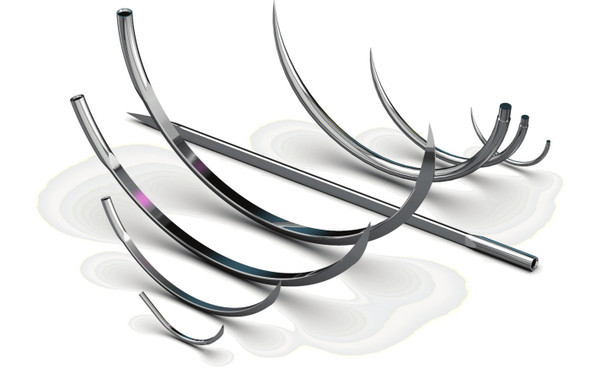
Cutting needles are designed with sharp edges to penetrate tough tissues like skin or cartilage.
Applications
- Skin closures and orthopedic procedures.
- Use in areas with dense or fibrous tissue.
Key Features
- Triangular cross-section for efficient cutting.
- Strong and durable for dense tissue.
- Available in conventional or reverse-cutting designs.
2. Taper Needles
Taper needles have a round body that gradually tapers to a sharp point, ideal for delicate tissue.
Applications
- Use in soft tissues like blood vessels or intestines.
- Cardiovascular, gynecological, or urological surgeries.
Key Features
- Smooth design minimizes tissue trauma.
- Suitable for suturing fragile or delicate tissues.
- Prevents tearing and tissue damage.
3. Blunt Needles
Blunt needles are used for suturing friable tissues and are designed to prevent accidental injury.
Applications
- Use in soft, friable tissues like the liver or spleen.
- Procedures requiring safety-focused tools.
Key Features
- Rounded tip for atraumatic suturing.
- Reduces risks of accidental needle sticks.
- Ideal for high-risk environments like obstetrics.
4. Specialty Needles
Specialty needles are designed for unique surgical needs, such as ophthalmic or cardiovascular applications.
Applications
- Suturing in microsurgery or specialized procedures.
- Use in highly specific surgical fields.
Key Features
- Ultra-fine or customized designs for specific tasks.
- Engineered for precision and minimal tissue trauma.
- Available in various shapes and sizes.
Key Features of Sutures and Needles
- Material Variety: Includes synthetic, natural, absorbable, and non-absorbable options.
- Precision Engineering: Needles with sharp, durable points and sutures with high tensile strength.
- Sterility: Packaged and sterilized for safe surgical use.
- Tailored Designs: Sutures and needles available in various sizes, shapes, and configurations to meet specific needs.
- Biocompatibility: Made from materials designed to minimize tissue reactions and support healing.
Benefits of Sutures and Needles
1. Enhanced Wound Healing
Precise wound closure promotes better alignment and faster healing, reducing complications.
2. Versatility Across Procedures
Sutures and needles are available in designs tailored for specific surgical needs, from general surgery to delicate microsurgery.
3. Reduced Risk of Infection
Sterile and biocompatible materials minimize infection risks and ensure patient safety.
4. Improved Cosmetic Outcomes
Fine sutures and tapered needles minimize scarring and tissue damage, ensuring better aesthetic results.
5. Durability and Strength
High-quality materials ensure sutures maintain tensile strength and reliability during and after procedures.
Real-World Applications
1. Hospitals and Surgical Centers
- Use in general, cardiovascular, and orthopedic surgeries.
- Providing wound closure tools for complex and routine procedures.
2. Emergency Rooms
- Closing traumatic wounds quickly and efficiently.
- Durable sutures for managing high-tension injuries.
3. Outpatient Clinics
- Minor laceration repairs or wound closures.
- Ensuring precision and safety in non-surgical settings.
4. Veterinary Practices
- Suturing and wound management in animal care.
- Specialized sutures for delicate veterinary surgeries.
5. Educational Institutions
- Training medical students in suturing techniques with high-quality tools.
Frequently Asked Questions (FAQs)
1. What are absorbable sutures made from?
Absorbable sutures are made from synthetic materials like polyglycolic acid or natural materials like catgut, which degrade over time in the body.
2. When should non-absorbable sutures be used?
Non-absorbable sutures are ideal for long-term support, such as in external wound closures or cardiovascular procedures.
3. What is the difference between monofilament and braided sutures?
Monofilament sutures consist of a single strand, reducing infection risks, while braided sutures are multiple strands woven together for enhanced strength and knot security.
4. How are sutures and needles sterilized?
They are pre-sterilized during manufacturing and packaged to maintain sterility until use.
5. What type of needle is best for delicate tissues?
Taper needles are best for soft, delicate tissues like blood vessels or intestines due to their smooth, atraumatic design.
Equip your facility with premium Sutures and Needles for precision, reliability, and safety in wound closure. Explore a wide range of options, from absorbable and non-absorbable sutures to specialized needles, to meet the needs of your practice and enhance patient care.
-
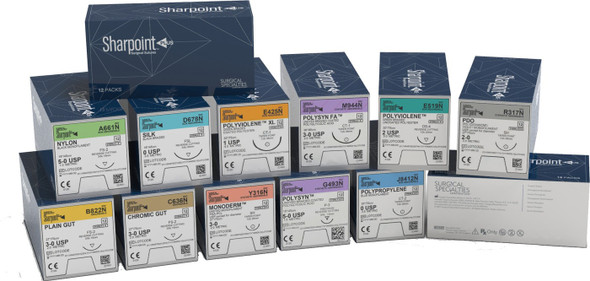

Sharpoint Plus PDO Sutures – PDO Polydioxanone suture, Absorbable, USP sizes 5-0 to 3-0, 12 Configurations
Surgical Specialties
$121.99 - $325.99Sharpoint Plus PDO Sutures A monofilament polydioxanone suture range that holds 80 to 90 percent of its strength at 14 days, 60 to 82 percent at 28 days and 47 to 79 percent at 42 days. This page...$121.99 - $325.99 -
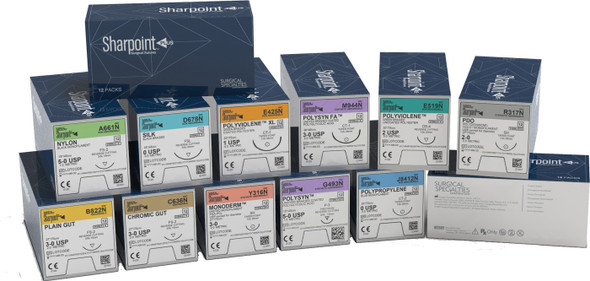

Sharpoint Plus Silk Sutures – Silk suture, Non-absorbable, USP sizes 7-0 to 1, 25 Configurations, Box of 12
Surgical Specialties
$78.99 - $431.99Sharpoint Plus Silk Sutures A braided, coated silk suture range that holds silk is non-absorbable, so the strand keeps its form in tissue rather than breaking down. This page carries it in USP sizes...$78.99 - $431.99 -


Sharpoint Plus Nylon Sutures – Nylon suture, Non-absorbable, USP sizes 11-0 to 2-0, 42 Configurations, Box of
Surgical Specialties
$105.99 - $420.99Sharpoint Plus Nylon Sutures A monofilament nylon suture range that holds nylon is non-absorbable, so the strand keeps its form in tissue rather than breaking down. This page carries it in USP sizes...$105.99 - $420.99 -
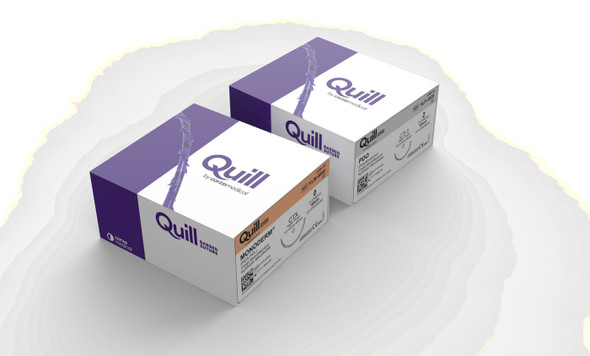
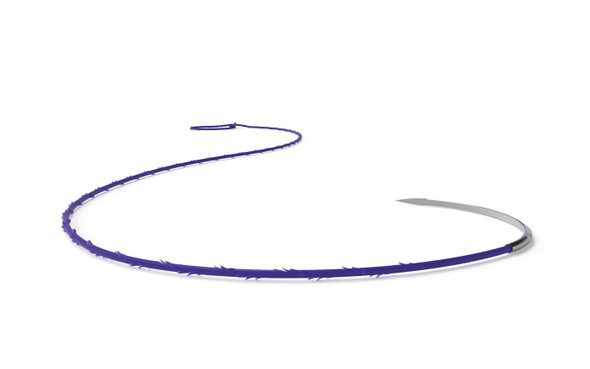
Quill PDO Barbed Sutures – PDO Polydioxanone Knotless Tissue Closure, Bidirectional and Unidirectional, USP
Surgical Specialties
$120.99 - $755.99Quill PDO Barbed Sutures Quill closes tissue without a single knot, because barbs cut into the strand anchor each pass as it is placed. This page carries the PDO range in USP sizes 4-0 to 2, in the...$120.99 - $755.99 -
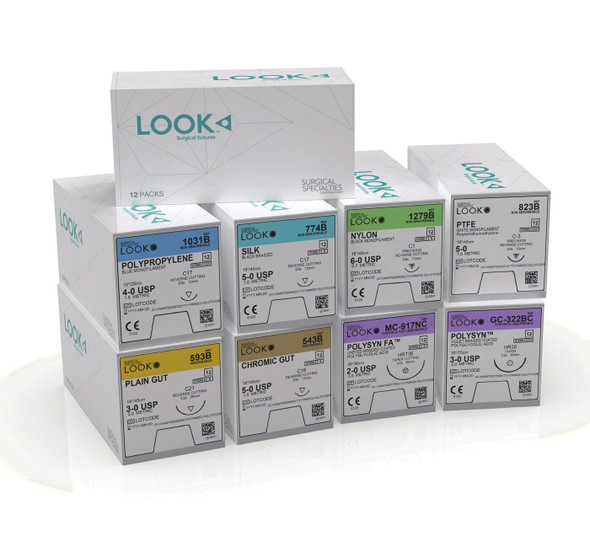
LOOK PTFE Sutures – PTFE Polytetrafluoroethylene suture, Non-absorbable, USP sizes 6-0 to 2-0, 9
Surgical Specialties
$175.99 - $187.99LOOK PTFE Sutures A monofilament polytetrafluoroethylene suture range that holds PTFE is non-absorbable, so the strand keeps its form in tissue rather than breaking down. This page carries it in USP...$175.99 - $187.99 -
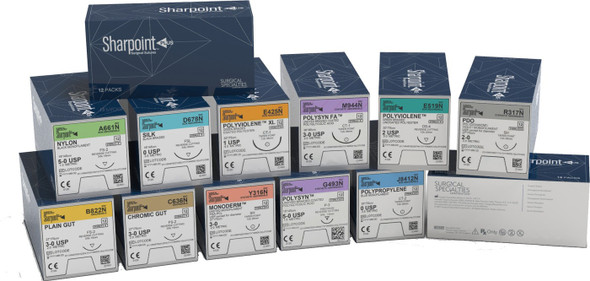

Sharpoint Plus PolySyn Sutures – PolySyn Polyglycolic Acid suture, Absorbable, USP sizes 6-0 to 1, 52
Surgical Specialties
$89.99 - $418.99Sharpoint Plus PolySyn Sutures A braided polyglycolic acid suture range that holds 50 percent of its strength at 14 days and 20 percent at 21 days. This page carries it in USP sizes 6-0 to 1, across...$89.99 - $418.99 -


LOOK PolySyn Sutures – PolySyn Polyglycolic Acid suture, Absorbable, USP sizes 6-0 to 1, 19 Configurations
Surgical Specialties
$116.99 - $225.99LOOK PolySyn Sutures A braided polyglycolic acid suture range that holds 50 percent of its strength at 14 days and 20 percent at 21 days. This page carries it in USP sizes 6-0 to 1, across 19 needle...$116.99 - $225.99 -
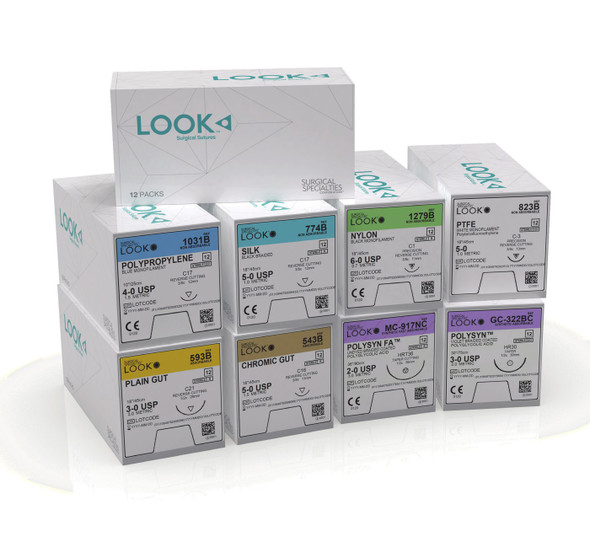

LOOK Polypropylene Sutures – Polypropylene suture, Non-absorbable, USP sizes 6-0 to 4-0, 9 Configurations
Surgical Specialties
$110.99 - $248.99LOOK Polypropylene Sutures A monofilament polypropylene suture range that holds polypropylene is non-absorbable and inert, so the strand keeps its form in tissue rather than breaking down. This page...$110.99 - $248.99 -


LOOK Nylon Sutures – Nylon suture, Non-absorbable, USP sizes 7-0 to 2-0, 39 Configurations, Box of 12
Surgical Specialties
$99.99 - $540.99LOOK Nylon Sutures A monofilament nylon suture range that holds nylon is non-absorbable, so the strand keeps its form in tissue rather than breaking down. This page carries it in USP sizes 7-0 to...$99.99 - $540.99 -
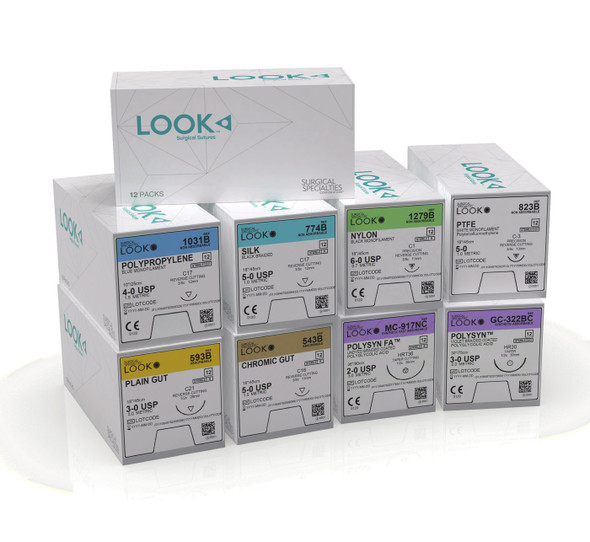

LOOK Silk Sutures – Silk suture, Non-absorbable, USP sizes 6-0 to 0, 21 Configurations, Box of 12
Surgical Specialties
$84.99 - $201.99LOOK Silk Sutures A braided, coated silk suture range that holds silk is non-absorbable, so the strand keeps its form in tissue rather than breaking down. This page carries it in USP sizes 6-0 to 0,...$84.99 - $201.99 -


LOOK Plain Gut Sutures – Plain Gut suture, Absorbable, USP sizes 6-0 to 2-0, 19 Configurations, Box of 12
Surgical Specialties
$90.99 - $293.99LOOK Plain Gut Sutures A twisted natural gut suture range that holds strength retention varies with the gut type and the placement site. This page carries it in USP sizes 6-0 to 2-0, across 19 needle...$90.99 - $293.99 -


LOOK Chromic Gut Sutures – Chromic Gut suture, Absorbable, USP sizes 6-0 to 2-0, 17 Configurations, Box of 12
Surgical Specialties
$94.99 - $291.99LOOK Chromic Gut Sutures A twisted natural gut treated with chromic salts suture range that holds strength retention varies with the gut type and the placement site. This page carries it in USP sizes...$94.99 - $291.99
About Suture and Needles
Sutures and Needles are indispensable medical tools used for closing wounds, securing tissues, and promoting healing in surgical and non-surgical procedures. From minor lacerations to complex surgeries, sutures and needles ensure precise wound closure, reducing complications and enhancing patient recovery. Available in a wide variety of materials, sizes, and designs, they cater to diverse medical needs across specialties such as general surgery, dermatology, and orthopedics.
Why Are Sutures and Needles Essential?
Sutures and needles play a critical role in wound management by securely closing tissue layers and facilitating proper healing. Their designs enable healthcare professionals to achieve accuracy, minimize scarring, and prevent infection. By maintaining tension and alignment in wound edges, sutures support tissue repair and restore structural integrity, making them vital in medical practice.
Types of Sutures
1. Absorbable Sutures
Absorbable sutures are designed to break down naturally in the body over time, eliminating the need for removal.
Applications
- Internal surgeries like gastrointestinal or gynecological procedures.
- Pediatric surgeries or wounds requiring minimal follow-up care.
Key Features
- Made from materials like polyglycolic acid, polylactic acid, or catgut.
- Absorbed by the body within weeks or months.
- Ideal for tissues that heal quickly.
2. Non-Absorbable Sutures
Non-absorbable sutures are designed to remain in place indefinitely or until manually removed.
Applications
- External wound closures like skin sutures.
- Long-term applications in cardiovascular or orthopedic procedures.
Key Features
- Made from materials like silk, nylon, or polyester.
- Durable and strong for extended wound support.
- Requires removal after healing in external applications.
3. Monofilament Sutures
Monofilament sutures consist of a single strand, minimizing tissue drag and reducing infection risks.
Applications
- Plastic surgery or other procedures requiring minimal scarring.
- Use in tissues prone to inflammation.
Key Features
- Smooth surface for easy passage through tissue.
- Resistant to bacterial colonization.
- Lower knot security compared to braided sutures.
4. Braided Sutures
Braided sutures are composed of multiple strands woven together, providing superior knot security and tensile strength.
Applications
- Use in high-tension areas like fascia or tendons.
- Ideal for procedures requiring strong, secure sutures.
Key Features
- Excellent handling and knot security.
- May cause more tissue drag compared to monofilament sutures.
- Coated options available to reduce friction.
5. Specialty Sutures
Specialty sutures are designed for specific surgical needs, such as cardiovascular or ophthalmic procedures.
Applications
- Use in delicate tissues like blood vessels or eyes.
- Procedures requiring specialized materials or coatings.
Key Features
- Tailored for specific surgical requirements.
- Available in absorbable and non-absorbable options.
- Precision-engineered for delicate applications.
Types of Needles
1. Cutting Needles
Cutting needles are designed with sharp edges to penetrate tough tissues like skin or cartilage.
Applications
- Skin closures and orthopedic procedures.
- Use in areas with dense or fibrous tissue.
Key Features
- Triangular cross-section for efficient cutting.
- Strong and durable for dense tissue.
- Available in conventional or reverse-cutting designs.
2. Taper Needles
Taper needles have a round body that gradually tapers to a sharp point, ideal for delicate tissue.
Applications
- Use in soft tissues like blood vessels or intestines.
- Cardiovascular, gynecological, or urological surgeries.
Key Features
- Smooth design minimizes tissue trauma.
- Suitable for suturing fragile or delicate tissues.
- Prevents tearing and tissue damage.
3. Blunt Needles
Blunt needles are used for suturing friable tissues and are designed to prevent accidental injury.
Applications
- Use in soft, friable tissues like the liver or spleen.
- Procedures requiring safety-focused tools.
Key Features
- Rounded tip for atraumatic suturing.
- Reduces risks of accidental needle sticks.
- Ideal for high-risk environments like obstetrics.
4. Specialty Needles
Specialty needles are designed for unique surgical needs, such as ophthalmic or cardiovascular applications.
Applications
- Suturing in microsurgery or specialized procedures.
- Use in highly specific surgical fields.
Key Features
- Ultra-fine or customized designs for specific tasks.
- Engineered for precision and minimal tissue trauma.
- Available in various shapes and sizes.
Key Features of Sutures and Needles
- Material Variety: Includes synthetic, natural, absorbable, and non-absorbable options.
- Precision Engineering: Needles with sharp, durable points and sutures with high tensile strength.
- Sterility: Packaged and sterilized for safe surgical use.
- Tailored Designs: Sutures and needles available in various sizes, shapes, and configurations to meet specific needs.
- Biocompatibility: Made from materials designed to minimize tissue reactions and support healing.
Benefits of Sutures and Needles
1. Enhanced Wound Healing
Precise wound closure promotes better alignment and faster healing, reducing complications.
2. Versatility Across Procedures
Sutures and needles are available in designs tailored for specific surgical needs, from general surgery to delicate microsurgery.
3. Reduced Risk of Infection
Sterile and biocompatible materials minimize infection risks and ensure patient safety.
4. Improved Cosmetic Outcomes
Fine sutures and tapered needles minimize scarring and tissue damage, ensuring better aesthetic results.
5. Durability and Strength
High-quality materials ensure sutures maintain tensile strength and reliability during and after procedures.
Real-World Applications
1. Hospitals and Surgical Centers
- Use in general, cardiovascular, and orthopedic surgeries.
- Providing wound closure tools for complex and routine procedures.
2. Emergency Rooms
- Closing traumatic wounds quickly and efficiently.
- Durable sutures for managing high-tension injuries.
3. Outpatient Clinics
- Minor laceration repairs or wound closures.
- Ensuring precision and safety in non-surgical settings.
4. Veterinary Practices
- Suturing and wound management in animal care.
- Specialized sutures for delicate veterinary surgeries.
5. Educational Institutions
- Training medical students in suturing techniques with high-quality tools.
Frequently Asked Questions (FAQs)
1. What are absorbable sutures made from?
Absorbable sutures are made from synthetic materials like polyglycolic acid or natural materials like catgut, which degrade over time in the body.
2. When should non-absorbable sutures be used?
Non-absorbable sutures are ideal for long-term support, such as in external wound closures or cardiovascular procedures.
3. What is the difference between monofilament and braided sutures?
Monofilament sutures consist of a single strand, reducing infection risks, while braided sutures are multiple strands woven together for enhanced strength and knot security.
4. How are sutures and needles sterilized?
They are pre-sterilized during manufacturing and packaged to maintain sterility until use.
5. What type of needle is best for delicate tissues?
Taper needles are best for soft, delicate tissues like blood vessels or intestines due to their smooth, atraumatic design.
Equip your facility with premium Sutures and Needles for precision, reliability, and safety in wound closure. Explore a wide range of options, from absorbable and non-absorbable sutures to specialized needles, to meet the needs of your practice and enhance patient care.