
Anatomical Models
Anatomical Models are lifelike replicas of human or animal anatomy, used for medical education, patient demonstrations, and clinical training. These detailed models provide visual and hands-on learning opportunities for healthcare professionals, educators, and students. Designed with precision and durability, anatomical models range from full-body systems to specific organs, bones, and tissues, offering a deeper understanding of the human body.
Why Anatomical Models Are Essential
Anatomical models simplify complex concepts by providing a tangible, 3D representation of the human body. They are indispensable for teaching anatomy, explaining medical conditions, and practicing procedures. Whether used in a classroom, hospital, or clinic, these models enhance learning and improve communication between medical professionals and patients.
Types of Anatomical Models
1. Full-Body Anatomical Models
Best for: Comprehensive anatomy education and training.
Full-body models display the entire human body, including internal organs, muscles, and skeletal systems. These models are ideal for gaining a holistic view of human anatomy.
Key Features
- Removable parts for hands-on exploration.
- Color-coded sections for easy identification of systems.
- Durable materials for long-term use.
- Stand-mounted designs for stability and accessibility.
Applications
- Medical school and nursing programs for detailed anatomy studies.
- Healthcare settings for patient education about conditions or surgeries.
- Demonstrating interactions between body systems.
2. Skeletal Models
Best for: Studying bone structure and joint mechanics.
Skeletal models range from full skeletons to specific bones or joint structures, offering detailed insights into the skeletal system.
Key Features
- Life-size and miniature options.
- Movable joints for demonstrating range of motion.
- Realistic textures and markings for bone landmarks.
- Sturdy, lightweight materials for portability.
Applications
- Teaching bone anatomy and function in classrooms.
- Orthopedic education and training for healthcare professionals.
- Explaining joint mechanics to patients with injuries or conditions.
3. Organ Models
Best for: In-depth study of individual organ structures.
Organ models focus on specific body parts like the heart, lungs, kidneys, or brain, providing intricate details for advanced learning.
Key Features
- Sectioned designs to reveal internal structures.
- Realistic textures and coloring for accuracy.
- Magnified models for microscopic details.
- Compact sizes for convenient handling.
Applications
- Cardiology or pulmonology training with heart and lung models.
- Patient education about organ-related conditions or surgeries.
- Specialized learning in fields like neurology or nephrology.
4. Muscle Models
Best for: Understanding the muscular system and body mechanics.
Muscle models show the layers of muscles in the human body, including origin and insertion points. They are crucial for learning movement and muscle group functions.
Key Features
- Labeled muscles for easy identification.
- Detachable parts to explore deeper layers.
- Movable joints for demonstrating muscle movement.
Applications
- Physical therapy and kinesiology training.
- Teaching biomechanics and muscle function.
- Demonstrating sports-related injuries and rehabilitation.
5. Specialty Models
Best for: Specific fields like dentistry, gynecology, or ophthalmology.
Specialty models cater to niche areas of medicine, focusing on specific parts like teeth, reproductive organs, or the eye.
Key Features
- Highly detailed structures for precise study.
- Sectioned designs to explore internal anatomy.
- Field-specific models for advanced training.
Applications
- Dental schools for learning oral anatomy and procedures.
- Gynecological education with reproductive system models.
- Ophthalmology training with eye models.
6. Pediatric and Neonatal Models
Best for: Learning anatomy in younger patients.
These models depict the anatomy of infants or children, focusing on developmental differences and pediatric-specific structures.
Key Features
- Scaled-down versions of adult anatomy.
- Specialized models for fetal development or neonatal care.
- Durable materials for repeated use.
Applications
- Pediatric training programs in medical schools.
- Explaining developmental conditions to families.
- Neonatal care simulations in clinical environments.
Key Features of Anatomical Models
- Realistic Details: Accurate depictions of anatomical structures for effective learning.
- Removable Parts: Allows hands-on exploration of internal components.
- Durability: Made from high-quality materials for frequent use in education or clinical settings.
- Versatility: Models available for every body system and medical specialty.
- Portability: Lightweight options for easy transport and storage.
Benefits of Anatomical Models
1. Enhanced Learning
Provides visual and tactile aids to reinforce theoretical knowledge.
2. Improved Patient Communication
Simplifies explanations of medical conditions and procedures.
3. Versatile Applications
Used in educational, clinical, and research settings across disciplines.
4. Skill Development
Enables hands-on practice of medical procedures and techniques.
5. Long-Term Investment
Durable designs ensure consistent use for years, making them cost-effective.
Real-World Uses
- Medical Education: Training future healthcare professionals in anatomy and physiology.
- Patient Education: Helping patients understand medical conditions or surgical procedures.
- Research and Development: Studying anatomy for new treatments or procedures.
- Specialty Training: Focused learning in areas like orthopedics, cardiology, or gynecology.
- Continuing Education: Keeping healthcare professionals updated on anatomy and medical advancements.
How to Choose the Right Anatomical Model
- Purpose: Select models tailored to your field (e.g., general anatomy, specialty areas).
- Detail Level: Choose highly detailed models for advanced learning or simplified versions for basic education.
- Size: Consider life-size models for realism or compact options for portability.
- Durability: Opt for high-quality materials to withstand frequent handling.
- Interactivity: Look for removable parts or movable joints for hands-on exploration.
Frequently Asked Questions (FAQs)
1. Are anatomical models accurate?
Yes, most models are designed with precise details to reflect actual human anatomy.
2. Can anatomical models be used for patient education?
Absolutely, they are excellent tools for explaining conditions or procedures to patients.
3. Are anatomical models reusable?
Yes, they are made from durable materials designed for repeated use.
4. Do models include labeled parts?
Many models come with labeled parts for easy identification and learning.
5. What materials are used in anatomical models?
Common materials include PVC, resin, and durable plastics for longevity and realism.
Related Products
Enhance your learning experience with educational charts, training simulators, and medical textbooks. Visit our blog for tips on using anatomical models effectively in education.
Explore the intricacies of the human body with Anatomical Models. From full-body systems to organ-specific models, find the perfect tool for your educational or clinical needs.
-

Anatomical Chart Company Your Skeleton Chart – Laminated Wall Poster for Patient Education
Anatomical Chart Company
$62.99The Your Skeleton Anatomical Chart is a wall chart published by Anatomical Chart Company. The Blueprint for Health series of charts illustrated by Kate Sweeney are designed to make human anatomy come...- SKU:
- 1587797356
$62.99 -
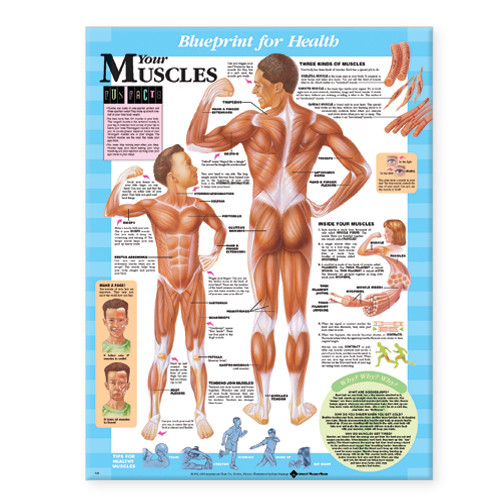
Anatomical Chart Company Your Muscles Chart – Laminated Wall Poster for Exam Rooms, Classrooms and Skills Labs
Anatomical Chart Company
$62.99The Your Muscles Anatomical Chart is a wall chart published by Anatomical Chart Company. The Blueprint for Health series of charts illustrated by Kate Sweeney are designed to make human anatomy come...- SKU:
- 1587797372
$62.99 -
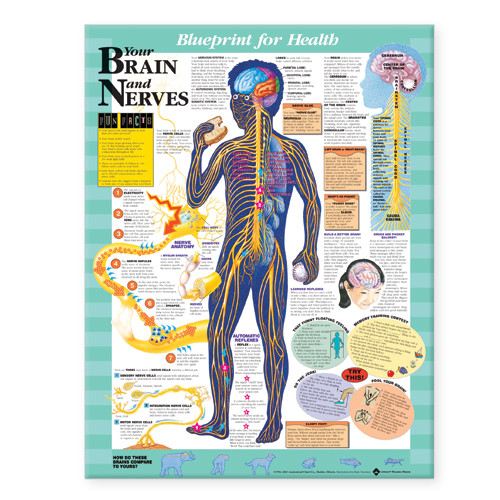
Anatomical Chart Company Your Brain and Nerves Chart – Laminated Poster for Clinics and Schools
Anatomical Chart Company
$62.99The Your Brain and Nerves Anatomical Chart is a wall chart published by Anatomical Chart Company. The Blueprint for Health series of charts illustrated by Kate Sweeney are designed to make human...- SKU:
- 1587797437
$62.99 -

Anatomical Chart Company Whiplash Injuries of the Head and Neck Anatomical Chart – Paper Poster
Anatomical Chart Company
$46.99The Whiplash Injuries of the Head and Neck Anatomical Chart is a wall chart published by Anatomical Chart Company. Whiplash Injuries of the Head and Neck is a useful and informative chart that shows...- SKU:
- 1587793768
$46.99 -

Anatomical Chart Company Whiplash Injuries of the Head and Neck Chart – Laminated Wall Poster
Anatomical Chart Company
$62.99The Whiplash Injuries of the Head and Neck Anatomical Chart is a wall chart published by Anatomical Chart Company. Whiplash Injuries of the Head and Neck is a useful and informative chart that shows...- SKU:
- 158779375X
$62.99 -

Anatomical Chart Company Vertebral Column Chart – Paper Wall Poster for Exam Rooms, Classrooms and Skills Labs
Anatomical Chart Company
$46.99The Vertebral Column Anatomical Chart is a wall chart published by Anatomical Chart Company. The Vertebral Column is one of our most popular charts! It turns the vertebral column explanations that...- SKU:
- 1587792117
$46.99 -

Anatomical Chart Company Vertebral Column Chart – Laminated Poster for Clinics and Schools
Anatomical Chart Company
$62.99The Vertebral Column Anatomical Chart is a wall chart published by Anatomical Chart Company. The Vertebral Column is one of our most popular charts! It turns the vertebral column explanations that...- SKU:
- 1587792109
$62.99 -
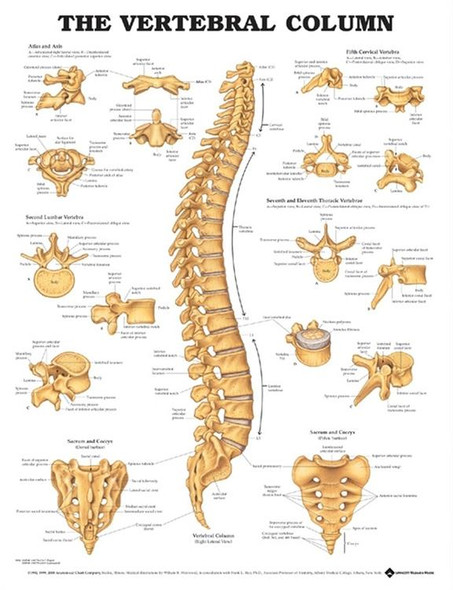
Anatomical Chart Company Vertebral Column Chart – Styrene Plastic Poster for Clinics and Schools
Anatomical Chart Company
$85.99The Vertebral Column Anatomical Chart is a wall chart published by Anatomical Chart Company. The Vertebral Column is one of our most popular charts! It turns the vertebral column explanations that...- SKU:
- 1587796899
$85.99 -
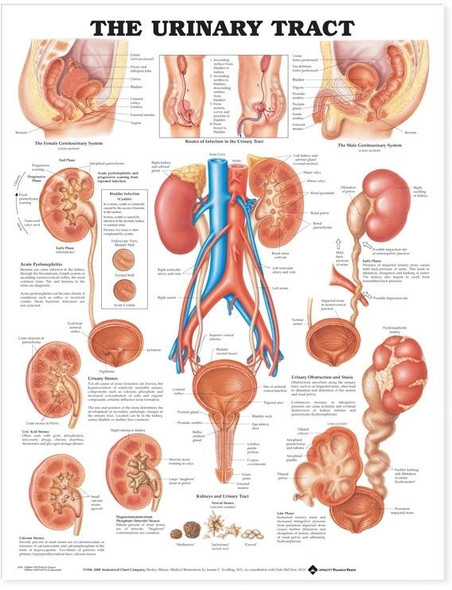
Anatomical Chart Company Urinary Tract Chart – Laminated Wall Poster for Patient Education
Anatomical Chart Company
$62.99The Urinary Tract Anatomical Chart puts detailed, fully labeled artwork of urinary tract on the wall where clinicians and students can use it every day. It turns the urinary tract explanations that...- SKU:
- 1587790718
$62.99 -

Anatomical Chart Company Understanding Stroke, Chart – Paper Poster for Clinics and Schools
Anatomical Chart Company
$62.99The Understanding Stroke, Anatomical Chart is a wall chart published by Anatomical Chart Company. Redesigned for easier comprehension, Understanding Stroke Second Edition provides essential...- SKU:
- 158779988X
$62.99 -

Anatomical Chart Company Understanding Pain Chart – Paper Wall Poster for Patient Education
Anatomical Chart Company
$46.99The Understanding Pain Anatomical Chart is a wall chart published by Anatomical Chart Company. Understanding Pain is a visual and textual overview of pain and provides an easy-to-understand tool for...- SKU:
- 1587799839
$46.99 -
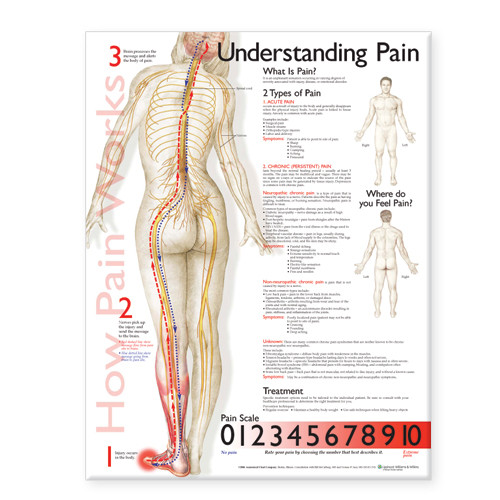
Anatomical Chart Company Understanding Pain Chart – Laminated Poster for Clinics and Schools
Anatomical Chart Company
$62.99The Understanding Pain Anatomical Chart is a wall chart published by Anatomical Chart Company. Understanding Pain is a visual and textual overview of pain and provides an easy-to-understand tool for...- SKU:
- 1587799847
$62.99 -

Anatomical Chart Company Understanding Low Back Pain Chart – Paper Poster for Clinics and Schools
Anatomical Chart Company
$46.99The Understanding Low Back Pain Anatomical Chart puts detailed, fully labeled artwork of understanding low back pain on the wall where clinicians and students can use it every day. It turns the...- SKU:
- 0781782422
$46.99 -
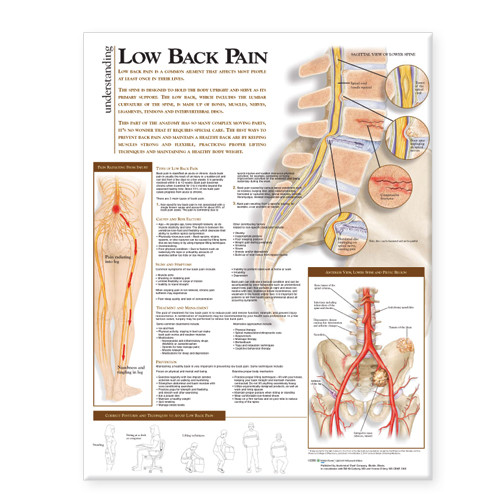
Anatomical Chart Company Understanding Low Back Pain Chart – Laminated Poster for Clinics and Schools
Anatomical Chart Company
$62.99The Understanding Low Back Pain Anatomical Chart puts detailed, fully labeled artwork of understanding low back pain on the wall where clinicians and students can use it every day. It turns the...- SKU:
- 0781782430
$62.99 -

Anatomical Chart Company Understanding Arthritis Chart – Paper Poster for Clinics and Schools
Anatomical Chart Company
$46.99The Understanding Arthritis Anatomical Chart is a wall chart published by Anatomical Chart Company. Our Understanding Arthritis chart illustrates in detail the main joints affected by osteoarthritis...- SKU:
- 1587793857
$46.99 -
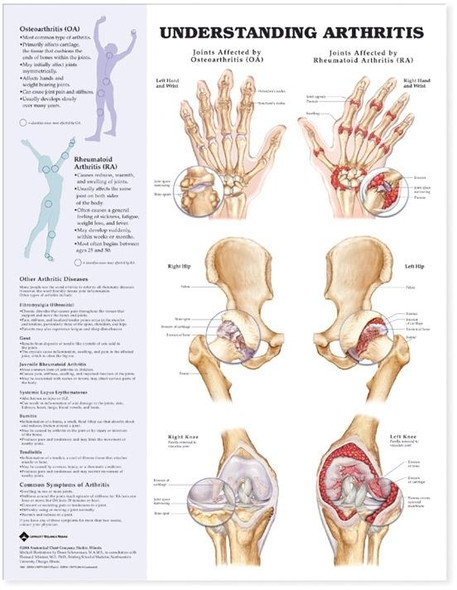
Anatomical Chart Company Understanding Arthritis Chart – Laminated Poster for Clinics and Schools
Anatomical Chart Company
$62.99The Understanding Arthritis Anatomical Chart is a wall chart published by Anatomical Chart Company. Our Understanding Arthritis chart illustrates in detail the main joints affected by osteoarthritis...- SKU:
- 1587793865
$62.99 -
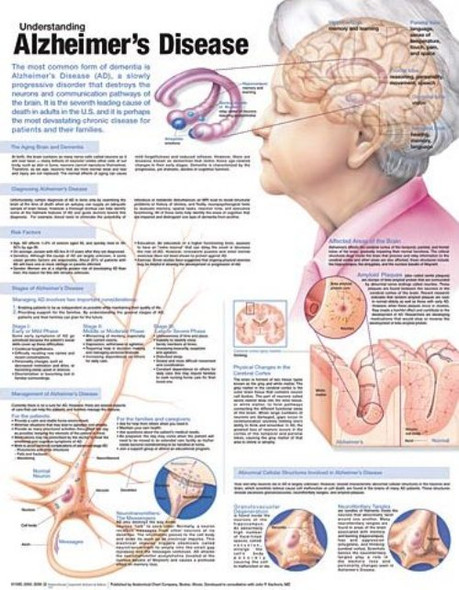
Anatomical Chart Company Understanding Alzheimer's Disease, Anatomical Chart – Paper Poster
Anatomical Chart Company
$62.99The Understanding Alzheimer's Disease, Anatomical Chart is a wall chart published by Anatomical Chart Company. The Second Edition Understanding Alzheimer's Disease defines Alzheimer's disease and...- SKU:
- 0781786347
$62.99 -

Anatomical Chart Company Trigger Point Chart Set Torso and Extremities Chart – Paper Wall Poster
Anatomical Chart Company
$85.99The Trigger Point Chart Set Torso and Extremities Anatomical Chart is a wall chart published by Anatomical Chart Company. This beautiful trigger point educational tool includes two charts: Trigger...- SKU:
- 0781773075
$85.99 -

Anatomical Chart Company The Temporomandibular Joint Chart – Laminated Poster for Clinics and Schools
Anatomical Chart Company
$62.99The The Temporomandibular Joint Anatomical Chart is a wall chart published by Anatomical Chart Company. Temporomandibular Joint (TMJ) chart defines and illustrates TMJ syndrome. It turns the the...- SKU:
- 1587792958
$62.99 -

Anatomical Chart Company The Lymphatic System Chart – Paper Poster for Clinics and Schools
Anatomical Chart Company
$46.99The The Lymphatic System Anatomical Chart is a wall chart published by Anatomical Chart Company. This classic illustration of The Lymphatic System was drawn by medical illustrator Peter Bachin in...- SKU:
- 1587790262
$46.99
About Anatomical Models
Anatomical Models are lifelike replicas of human or animal anatomy, used for medical education, patient demonstrations, and clinical training. These detailed models provide visual and hands-on learning opportunities for healthcare professionals, educators, and students. Designed with precision and durability, anatomical models range from full-body systems to specific organs, bones, and tissues, offering a deeper understanding of the human body.
Why Anatomical Models Are Essential
Anatomical models simplify complex concepts by providing a tangible, 3D representation of the human body. They are indispensable for teaching anatomy, explaining medical conditions, and practicing procedures. Whether used in a classroom, hospital, or clinic, these models enhance learning and improve communication between medical professionals and patients.
Types of Anatomical Models
1. Full-Body Anatomical Models
Best for: Comprehensive anatomy education and training.
Full-body models display the entire human body, including internal organs, muscles, and skeletal systems. These models are ideal for gaining a holistic view of human anatomy.
Key Features
- Removable parts for hands-on exploration.
- Color-coded sections for easy identification of systems.
- Durable materials for long-term use.
- Stand-mounted designs for stability and accessibility.
Applications
- Medical school and nursing programs for detailed anatomy studies.
- Healthcare settings for patient education about conditions or surgeries.
- Demonstrating interactions between body systems.
2. Skeletal Models
Best for: Studying bone structure and joint mechanics.
Skeletal models range from full skeletons to specific bones or joint structures, offering detailed insights into the skeletal system.
Key Features
- Life-size and miniature options.
- Movable joints for demonstrating range of motion.
- Realistic textures and markings for bone landmarks.
- Sturdy, lightweight materials for portability.
Applications
- Teaching bone anatomy and function in classrooms.
- Orthopedic education and training for healthcare professionals.
- Explaining joint mechanics to patients with injuries or conditions.
3. Organ Models
Best for: In-depth study of individual organ structures.
Organ models focus on specific body parts like the heart, lungs, kidneys, or brain, providing intricate details for advanced learning.
Key Features
- Sectioned designs to reveal internal structures.
- Realistic textures and coloring for accuracy.
- Magnified models for microscopic details.
- Compact sizes for convenient handling.
Applications
- Cardiology or pulmonology training with heart and lung models.
- Patient education about organ-related conditions or surgeries.
- Specialized learning in fields like neurology or nephrology.
4. Muscle Models
Best for: Understanding the muscular system and body mechanics.
Muscle models show the layers of muscles in the human body, including origin and insertion points. They are crucial for learning movement and muscle group functions.
Key Features
- Labeled muscles for easy identification.
- Detachable parts to explore deeper layers.
- Movable joints for demonstrating muscle movement.
Applications
- Physical therapy and kinesiology training.
- Teaching biomechanics and muscle function.
- Demonstrating sports-related injuries and rehabilitation.
5. Specialty Models
Best for: Specific fields like dentistry, gynecology, or ophthalmology.
Specialty models cater to niche areas of medicine, focusing on specific parts like teeth, reproductive organs, or the eye.
Key Features
- Highly detailed structures for precise study.
- Sectioned designs to explore internal anatomy.
- Field-specific models for advanced training.
Applications
- Dental schools for learning oral anatomy and procedures.
- Gynecological education with reproductive system models.
- Ophthalmology training with eye models.
6. Pediatric and Neonatal Models
Best for: Learning anatomy in younger patients.
These models depict the anatomy of infants or children, focusing on developmental differences and pediatric-specific structures.
Key Features
- Scaled-down versions of adult anatomy.
- Specialized models for fetal development or neonatal care.
- Durable materials for repeated use.
Applications
- Pediatric training programs in medical schools.
- Explaining developmental conditions to families.
- Neonatal care simulations in clinical environments.
Key Features of Anatomical Models
- Realistic Details: Accurate depictions of anatomical structures for effective learning.
- Removable Parts: Allows hands-on exploration of internal components.
- Durability: Made from high-quality materials for frequent use in education or clinical settings.
- Versatility: Models available for every body system and medical specialty.
- Portability: Lightweight options for easy transport and storage.
Benefits of Anatomical Models
1. Enhanced Learning
Provides visual and tactile aids to reinforce theoretical knowledge.
2. Improved Patient Communication
Simplifies explanations of medical conditions and procedures.
3. Versatile Applications
Used in educational, clinical, and research settings across disciplines.
4. Skill Development
Enables hands-on practice of medical procedures and techniques.
5. Long-Term Investment
Durable designs ensure consistent use for years, making them cost-effective.
Real-World Uses
- Medical Education: Training future healthcare professionals in anatomy and physiology.
- Patient Education: Helping patients understand medical conditions or surgical procedures.
- Research and Development: Studying anatomy for new treatments or procedures.
- Specialty Training: Focused learning in areas like orthopedics, cardiology, or gynecology.
- Continuing Education: Keeping healthcare professionals updated on anatomy and medical advancements.
How to Choose the Right Anatomical Model
- Purpose: Select models tailored to your field (e.g., general anatomy, specialty areas).
- Detail Level: Choose highly detailed models for advanced learning or simplified versions for basic education.
- Size: Consider life-size models for realism or compact options for portability.
- Durability: Opt for high-quality materials to withstand frequent handling.
- Interactivity: Look for removable parts or movable joints for hands-on exploration.
Frequently Asked Questions (FAQs)
1. Are anatomical models accurate?
Yes, most models are designed with precise details to reflect actual human anatomy.
2. Can anatomical models be used for patient education?
Absolutely, they are excellent tools for explaining conditions or procedures to patients.
3. Are anatomical models reusable?
Yes, they are made from durable materials designed for repeated use.
4. Do models include labeled parts?
Many models come with labeled parts for easy identification and learning.
5. What materials are used in anatomical models?
Common materials include PVC, resin, and durable plastics for longevity and realism.
Related Products
Enhance your learning experience with educational charts, training simulators, and medical textbooks. Visit our blog for tips on using anatomical models effectively in education.
Explore the intricacies of the human body with Anatomical Models. From full-body systems to organ-specific models, find the perfect tool for your educational or clinical needs.