


Description
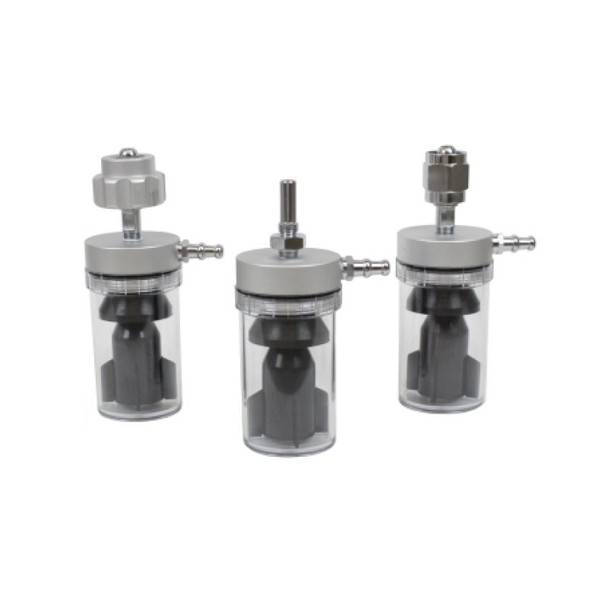
Chemetron Vacuum Trap is a reusable vacuum trap from Chemetron that sits between the suction canister and the regulator or wall outlet and catches overflow before it can contaminate the vacuum system. One overflow event can foul a regulator and seed a central vacuum line, and the trap is the inexpensive guard that stops it.
- Reusable trap body
- Catches canister overflow before the regulator
- Three inlet styles for common connections
- Standard hose barb outlet
Cheap Insurance for Regulators and Wall Systems
The trap installs in the vacuum path ahead of the regulator, where rising fluid from an overfilled canister collects in the trap instead of passing into precision parts. A float in the trap rises with the fluid and shuts the vacuum path as the trap fills, which buys the clinician time to change the canister. Three inlet styles cover the connections found on hospital walls and portable setups: DISS hand tight, DISS nut and nipple, and a male trap fitting. The outlet is a standard hose barb, so the trap drops into existing suction setups without replumbing the line.
Features and Benefits
- Function: Intercepts fluid overflow in the vacuum path
- Shutoff: Float closes the vacuum path as the trap fills
- Inlets: DISS hand tight, DISS nut and nipple, or male fitting, by model
- Outlet: Standard hose barb
- Use: Reusable, cleaned between patients per facility protocol
Product Specifications
Identification
- Manufacturer: Chemetron (Allied Healthcare)
- Product Line: Vacuum traps
Stock the full setup in one order: browse Hospital Supplies for companion items, or shop the complete Allied Healthcare range at MedicalEx.
Why Every Suction Setup Needs a Trap
Regulators and central vacuum systems are expensive to decontaminate, and overflow is a when, not an if, on busy units. A reusable trap in the line is the standard, inexpensive answer that biomedical teams have used for decades.
- Protects regulators from fluid damage
- Guards the central vacuum system
- Float shutoff buys response time
- Reusable body keeps cost per use low
Manuals and Troubleshooting Guides
Frequently Asked Questions
Where does the trap install?
Install it in the vacuum hose between the collection canister and the regulator or wall outlet, with the float upright. Fluid rising from the canister collects in the trap first.
What happens when the trap fills?
The float rises and closes the vacuum path, which stops suction and signals the clinician to empty or replace the canister and service the trap. Confirm the specifications for part 12-20-1000 on this page before ordering.
Is the trap reusable?
Yes. The trap is a reusable device that is emptied and cleaned between patients following facility protocol.
Which inlet should I choose?
Match the inlet to your connection: DISS hand tight for tool-free changes, DISS nut and nipple for a wrench-tight threaded joint, or the male fitting for matching trap ports. The specifications above carry the complete details for part 12-20-1000.
Does it replace the canister filter?
No. The trap complements the canister lid filter. The filter guards against aerosol, and the trap catches bulk fluid overflow.