




Description
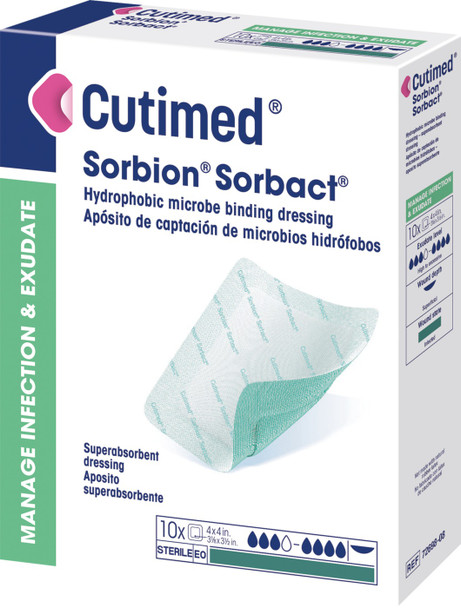
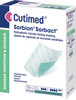
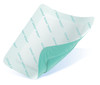
The Cutimed Sorbion Sorbact puts a green Sorbact bacteria-binding contact layer in front of a hydroactive superabsorbent core, so one dressing manages infection and heavy exudate together. The 4 in x 4 in size covers superficial infected wounds in boxes of ten.
- Bacteria-binding layer – hydrophobic microbes bind irreversibly to the green contact layer and leave with the dressing.
- No active agents – nothing is released into the wound, so development of bacterial resistance is not expected.
- Superabsorbent core – high to excessive exudate is absorbed and retained behind the binding layer.
Bioburden Control and Heavy Absorption in One Dressing
Infected wounds that also exude heavily usually force a choice between an antimicrobial layer and an absorbent pad, or a stack of both. This dressing combines them, placing the bacteria-binding surface directly against the wound and the gel-forming core behind it. Bacteria and fungi that carry a hydrophobic surface bind to the contact layer on contact and are removed when the dressing comes off. Because the mechanism is physical, the manufacturer states that resistance development is not expected. In vitro testing shows the technology inhibits the growth of the top five WHO priority pathogens.
Features and Benefits
Two mechanisms share one dressing here, and the sections below separate what each one does.
Bacteria Binding
- Sorbact Technology Layer: the green contact layer binds hydrophobic bacteria and fungi irreversibly on contact.
- Removal With the Dressing: bound microorganisms leave the wound when the dressing is changed, lowering bioburden.
- No Released Agents: nothing active is released into the wound, and bacterial resistance is not expected.
Exudate Handling
- Gel-Forming Superabsorbent Core: the hydroactive core absorbs and retains high to excessive exudate levels.
- Maceration Protection: retained fluid is held away from the wound edges, supporting a moist but controlled environment.
- Full-Surface Contact: the pad should overlap the wound margins by at least 2 cm so the binding layer touches the complete wound surface.
Use
- Superficial Wounds: the dressing is intended for superficial wounds, clean, contaminated, colonized or infected.
- Do Not Cut: the dressing must not be cut, so size selection replaces trimming.
- Wear Up To Seven Days: if the clinical condition allows, one dressing can remain in place for up to seven days.
Product Specifications
This sterile bacteria-binding superabsorbent dressing comes in a single 4 in x 4 in size. The reference number for the item is given below.
Product Details
- Product Type: hydrophobic bacteria-binding wound dressing with a gel-forming superabsorbent core
- Contact Layer: green Sorbact wound contact layer, not made with natural rubber latex
- Indications: clean, contaminated, colonized or infected wounds with high to excessive exudate, including pressure injuries, diabetic foot ulcers, venous leg ulcers, traumatic wounds and surgical wounds
- Wound Depth: superficial wounds
- Wear Time: up to seven days if the clinical condition allows
- Sterility: sterile
Sizes and Item Numbers
- Item number 7269808: 4 in x 4 in dressing, wound pad 3.125 in x 3.5 in, box of 10
Explore the wider MedicalEx range of antimicrobial dressings and wound dressings for infected, exuding wounds.
Why Choose the Cutimed Sorbion Sorbact?
Stacking a binding layer under a separate absorbent pad doubles the products and the change steps at exactly the wounds that need the least disturbance. This dressing does both jobs in one placement, and its binding action needs no chemical agent to work.
- Two jobs, one dressing – bioburden control and heavy absorption arrive in a single placement.
- Physical mechanism – binding works on contact and never depends on an agent the wound can resist.
- Output handled too – the superabsorbent core keeps infected exudate retained, not spread.
- Low allergy risk – the manufacturer notes a low risk of allergies for the binding technology.
Frequently Asked Questions
How does it reduce bacteria without an active agent?
Its green contact layer is hydrophobic, so bacteria and fungi with hydrophobic surfaces bind to it irreversibly on contact. They are then removed with the dressing at change time, with nothing released into the wound.
Can bacteria become resistant to it?
The manufacturer states that development of bacterial resistance is not expected. The binding is a physical mechanism rather than a chemical kill, so it does not select for resistant organisms the way an agent can.
Can the dressing be cut to fit?
No, the dressing should not be cut. Choose the size that lets the pad overlap the wound margins by at least 2 cm, so the binding layer contacts the complete wound surface.
Which infected wounds is it for?
It is intended for clean, contaminated, colonized or infected wounds with high to excessive exudate, on superficial wounds. Pressure injuries, diabetic foot ulcers, venous leg ulcers, traumatic wounds and surgical wounds are all named.
How long can it stay in place?
If the clinical condition allows, it can be left in place for up to seven days. Change frequency otherwise follows exudate levels and the condition of the wound and surrounding skin.
What if it adheres to the wound at removal?
Moisten the dressing to assist removal and avoid disrupting the healing wound. Wetting releases the contact layer gently without pulling at the surface.