


Description
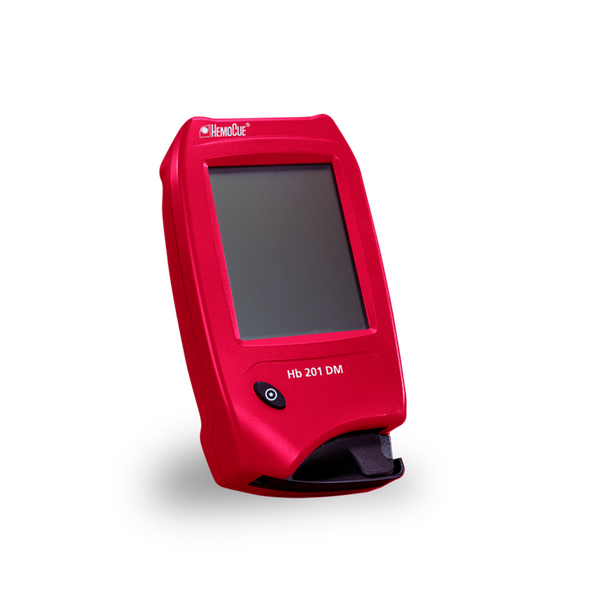
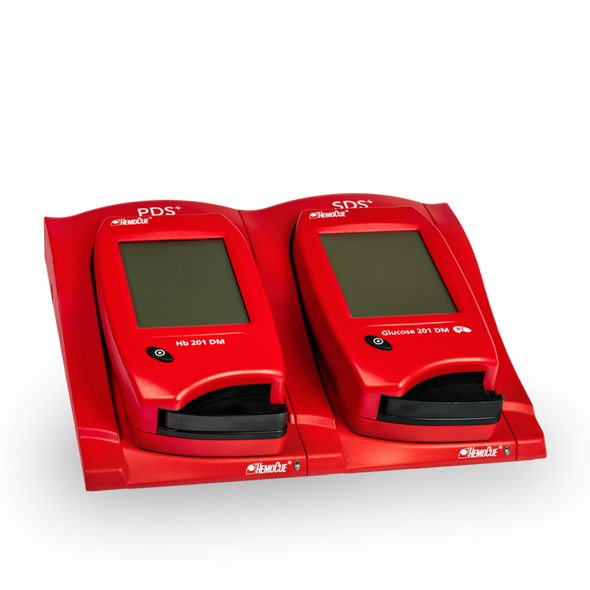
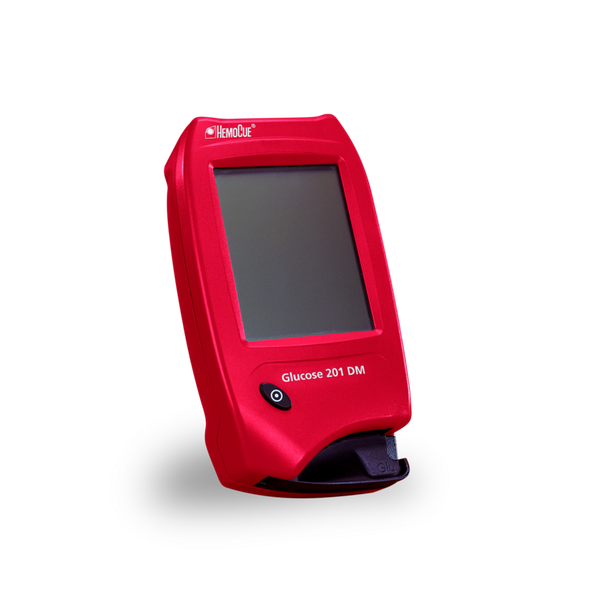
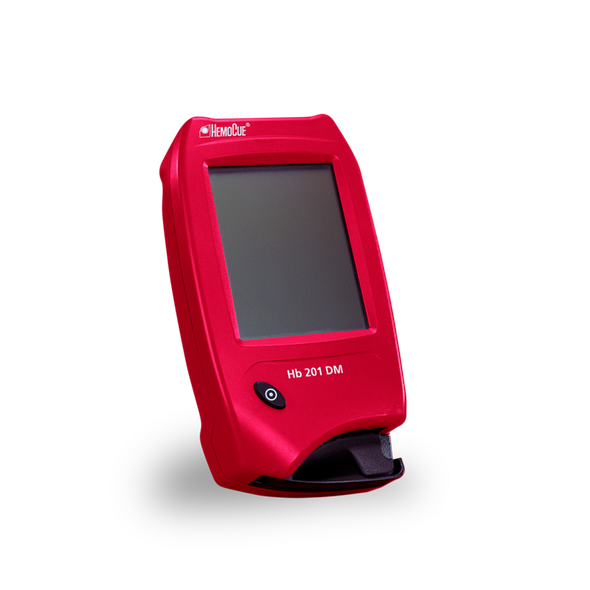
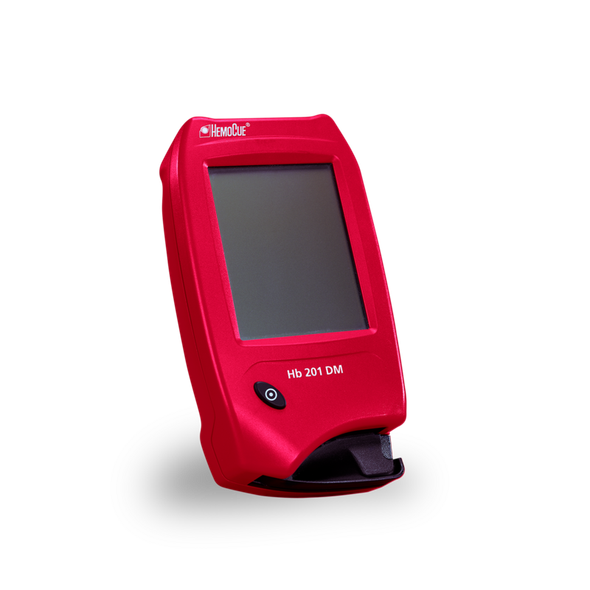
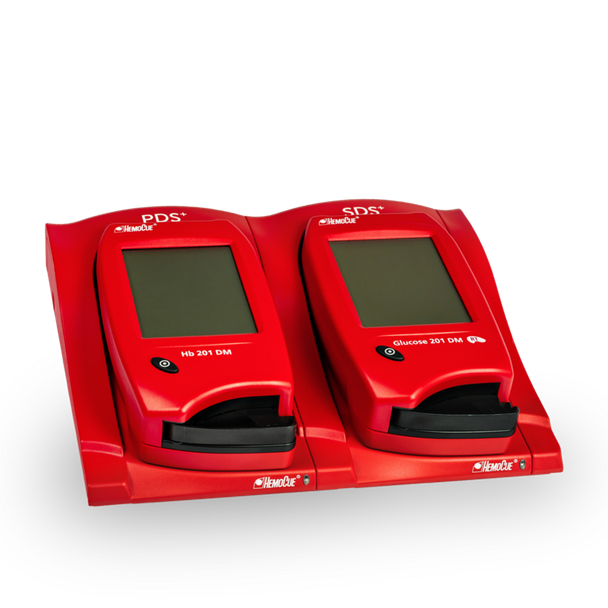
The HemoCue 201 DM Docking Station range connects Hb 201 DM and Glucose 201 DM analyzers to the data manager. The PDS+ primary station anchors the network, and each SDS+ secondary station extends it, with up to four secondary stations per primary. Docked analyzers recharge while their results move at 100 Mbit/s full duplex.
- Network expansion – up to four SDS+ secondary stations connect to one PDS+ primary
- Charge while docked – analyzer batteries recharge in the station between uses
- 100 Mbit/s full duplex – fast, reliable transfer between analyzers and the data manager
Charging and Data Transfer for DM Testing Programs
A primary station serves as the hub for a ward or laboratory testing point, passing results onward and powering the chain of secondary stations. Secondary stations add docking positions without new network drops, so a testing area can grow analyzer by analyzer. Measurements can even be performed while an analyzer sits docked, keeping a station in service during rounds. LED indicators on the stations show connection and charging status at a glance. The stations support the Hb 201 DM, Glucose 201 DM and Glucose 201 DM RT analyzers.
Features and Benefits
Network Design
- Primary hub – the PDS+ anchors connectivity and hosts the secondary chain
- Secondary expansion – the SDS+ adds a docking position, up to four per primary
- Full-duplex speed – 100 Mbit/s communication between analyzers and stations
Power and Use
- Charges docked analyzers – batteries recharge while results transfer
- Test while docked – measurements can be performed with the analyzer in the station
- Status LEDs – station LEDs show docking and charging state
Product Specifications
Product Details
- Compatibility: HemoCue Hb 201 DM, Glucose 201 DM and Glucose 201 DM RT analyzers
- Network capacity: Up to 4 secondary docking stations per primary station
- Communication speed: 100 Mbit/s full duplex
Handling and Storage
- Station weight: About 1.24 lb (566 g)
- Station dimensions: About 8.10 x 5.30 x 2.40 in (206 x 135 x 61 mm)
Explore More: Point-of-Care Analyzers | Shop all HemoCue
Why DM Programs Dock Their Analyzers
Connectivity only works when analyzers actually get docked, and a station that also charges makes docking the natural end of every test. The primary and secondary pairing lets a program start with one hub and add positions as testing volume grows.
- Always charged, always synced – one motion recharges the analyzer and sends its results
- Grows with the program – secondary stations extend a primary hub without new infrastructure
- Visible status – LEDs confirm connection and charging across the docking row
Frequently Asked Questions
Which analyzers fit these stations?
They support the Hb 201 DM, Glucose 201 DM and Glucose 201 DM RT analyzers for charging and data transfer.
How many secondary stations can connect?
Up to four SDS+ secondary stations connect to one PDS+ primary station.
Can testing continue while docked?
Yes. Measurements can be performed while the analyzer is docked.
What is the difference between the options?
The PDS+ is the primary hub station. The SDS+ is a secondary station that extends a primary hub with another docking position.
What package is sold here?
Choose the station type above. Each option is one station, sold as listed.