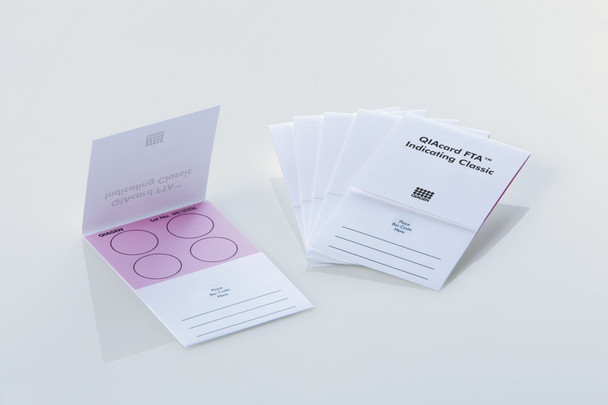



Description
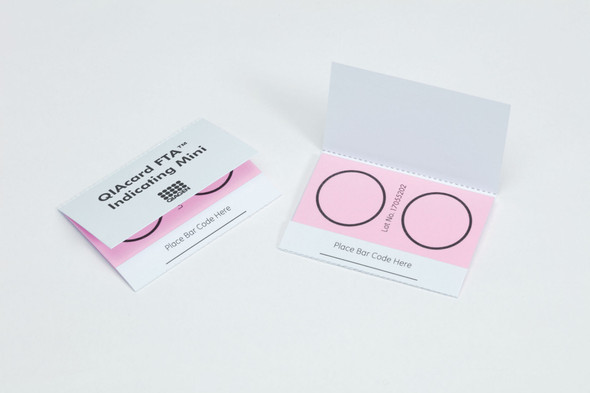
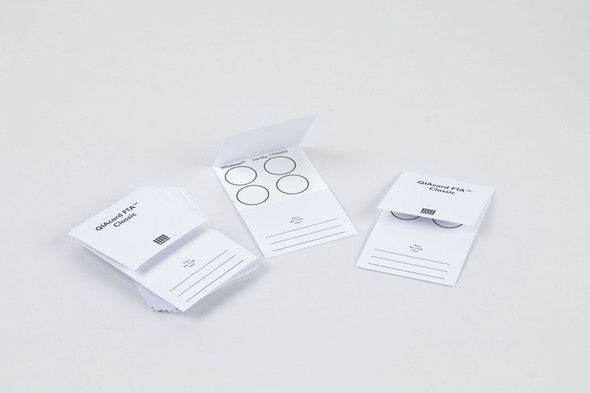
The Qiagen QIAcard FTA Indicating Classic Card adds a pink indicating dye to the four area Classic format so clear samples show exactly where they landed. The dye turns white on contact with colorless samples such as saliva and buccal cells, which removes the guesswork from punching later.
- Visible Sample Location – The pink to white color change marks the wetted area, so staff punch the right spot every time.
- Four Sample Areas – Each card carries four samples of up to 125 µL, for 500 µL total per card.
- Room Temperature Archive – Stabilized DNA stores on the card at room temperature for the long term.
About This Indicating FTA Classic Card
Clear samples are hard to track on a plain card, and a missed punch wastes the collection. The indicating dye solves that at the moment of application by changing color where the sample spreads. Under the dye, the same FTA chemistry lyses cells on contact and protects the captured DNA from nucleases and UV damage.
Buccal and saliva reference collection is the main use, including paternity, forensic reference and human identity programs. Dried cards move at ambient temperature and archive on shelving, and a washed punch feeds direct STR amplification. Programs that collect away from the laboratory get a visible confirmation that a usable sample was taken before the donor leaves.
Features and Benefits
Sample Handling
- Color Change Confirmation – The indicating dye turns from pink to white when a clear sample is applied, per the manufacturer.
- Cell Lysis on Contact – FTA chemistry breaks cells open on application and denatures proteins in the sample.
Laboratory Workflow
- Confident Punching – The white zone shows exactly where the sample sits, which cuts repeat punches and wasted card areas.
- Direct Amplification – Washed punches support direct STR amplification, so profiling starts without a separate extraction.
Product Specifications
Product Details
- Manufacturer: Qiagen
- Format: QIAcard FTA Indicating Classic
- Sample Areas: 4 per card
- Maximum Volume: 125 µL per sample area, 500 µL per card
- Indicating Dye: Yes, pink to white on sample application
- Long-Term Storage: Room temperature
- Intended Use: Molecular biology applications, not for diagnostic procedures
Packaging
- Options: 100 cards or 25 cards per pack
- Storage: Store at room temperature
Browse related categories: blood collection supplies and Qiagen products.
Why Choose This Indicating Classic Card
Reference programs live or die on first-pass sample quality, and clear buccal samples are the easiest to misjudge on a plain card. The indicating format gives collectors and laboratory staff the same visible evidence that the sample is present and correctly placed.
- Fewer Recollections – Visible sample placement catches empty or misplaced applications at collection time instead of at analysis, when the donor may be gone.
- Faster Bench Work – Punches land on the sample zone the first time, which shortens preparation across large batches.
- Dye Plus FTA Chemistry – The indicator is paired with the same stabilization chemistry as the standard Classic card, a differentiator over untreated indicating papers.
Manuals and Troubleshooting Guides
Frequently Asked Questions
Why does the card change color?
The indicating dye turns from pink to white where a colorless sample such as saliva or buccal cells is applied. That color change shows staff exactly where the sample sits on the card.
What samples suit the indicating format?
Clear samples such as saliva and buccal cell collections are the primary use. Colored samples like blood are usually collected on the non-indicating Classic card instead.
How much sample fits on one card?
Four sample areas each accept up to 125 µL, for 500 µL per card. One donor sample per area keeps reference collections organized.
How is the DNA analyzed afterward?
A punch from the white sample zone is washed and used directly in STR amplification. Standard extraction from the card is also supported by the manufacturer protocols.
How should dried cards be stored?
Store dried cards at room temperature, ideally in a multi-barrier pouch with a desiccant packet. DNA on the card remains stable at room temperature for long term archiving.
Can this card diagnose disease?
No, the manufacturer limits these cards to molecular biology applications. They are not intended for diagnosis, prevention or treatment of disease.