





Description
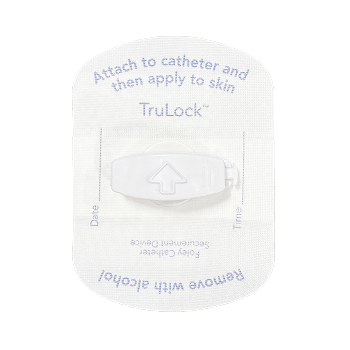
The HR Healthcare TruLock Foley Catheter Securement Devices keep a Foley catheter from migrating, pistoning and pulling, motions that all work against the bladder neck. This range covers swivel-clamp securement devices for 2-way and 3-way tubing in standard and pediatric formats.
- Swivel Clamp Security – The 360 degree rotation swivel clamp secures the tubing while allowing ease of movement, decreasing the likelihood of dislodgement.
- Mesh-Cloth Base – The mesh-cloth base material is made of polyester fiber and conforms to the leg, in standard and pediatric pad formats.
- 2-Way and 3-Way Clamps – Clamp configurations secure 2-way and 3-way Foley tubing, so one securement line covers the catheter range.
- Packaging – Sold 25 per box and 4 boxes per case, exactly as the manufacturer packs it.
- Manufacturer – Made by HR Healthcare in York, Pennsylvania.
Main Description
The TruLock gives care teams a grounded option from a manufacturer that builds complete catheter and ultrasound systems. Formats on this page run 25 per box and 4 boxes per case. The clamp turns with the patient instead of against the tubing, which is the difference between securement and a second problem. Standard and pediatric pad formats share the same clamp design, so the choice is purely about the patient. Stocking by the case keeps securement next to the trays where the protocol expects it, and the configuration list carries the full run of item numbers.
Features and Benefits
Securement Design
- Swivel Clamp Security – The 360 degree rotation swivel clamp secures the tubing while allowing ease of movement, decreasing the likelihood of dislodgement.
- Mesh-Cloth Base – The mesh-cloth base material is made of polyester fiber and conforms to the leg, in standard and pediatric pad formats.
- 2-Way and 3-Way Clamps – Clamp configurations secure 2-way and 3-way Foley tubing, so one securement line covers the catheter range.
- Latex and DEHP Free – The devices do not contain natural rubber latex or DEHP, which suits sensitive patients and strict material policies.
Product Specifications
Product Identity
- Brand – HR Healthcare
- Product Line – Catheter Securement Device
- Category – Catheters
- Configurations – 3 item numbers, one per option in the configuration list
- Way Counts – 2-Way, 3-Way
- Packaging – 25 per box and 4 boxes per case
- Item Numbers – TLFC1, TLFC5, TLFCP
Browse the full Catheters range or return to the HR Healthcare brand page for the complete system.
Why Choose This Product?
The TruLock earns its place because securement is the quiet line item in every catheter bundle, the one that keeps a placed catheter placed. HR Healthcare builds the devices for its own Foley range, in standard and pediatric formats.
- Dislodgement Prevention – A secured catheter is a catheter that stays placed, and securement is the cheapest CAUTI prevention on the unit.
- A Complete System – The securement devices are built by HR Healthcare to pair with its own Foley catheter range.
- HR Healthcare Depth – HR Healthcare manufactures the range in York, Pennsylvania, and publishes standard and pediatric instructions for use.
- Stock by the Case – Uniform case counts keep securement stocked next to the trays, where the protocol expects it.
Manuals and Troubleshooting Guides
Frequently Asked Questions
Which catheters do the devices secure?
The clamps secure 2-way and 3-way Foley catheter tubing, as named in each configuration. One configuration is built on a pediatric pad for smaller patients.
How does the clamp work?
A swivel clamp with 360 degree rotation grips the tubing and turns with the patient, which decreases the likelihood of dislodgement during movement. The mesh-cloth base holds the clamp against the leg.
What is the base made from?
The mesh-cloth base material is made of polyester fiber, and the devices do not contain natural rubber latex or DEHP. That suits latex-sensitive patients and strict material policies.
Why secure a Foley catheter at all?
Securement keeps the catheter from pistoning or pulling at the bladder neck, which is a core element of catheter-associated infection prevention bundles. An unsecured catheter is a protocol gap, whatever its brand.
How are the devices packed?
They ship 25 per box and 4 boxes per case, sold exactly as the manufacturer packs them. Case counts are stated on every configuration.


