


Description
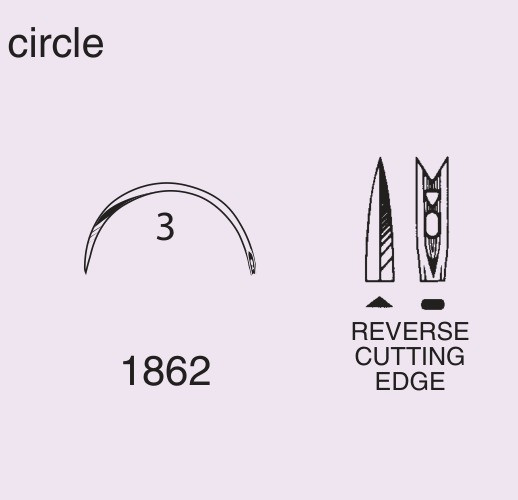
For teams that still work with eyed needles, the Anchor Martin Uterine Suture Needles offer the Martin Uterine pattern as a half circle reverse cutting edge needle in sterile single use and non-sterile reusable forms. Built for uterine work and borrowed by orthopedics, this heavy gauge pattern is the strong needle two different services ask for by name. Consistency case to case is the point: the same pattern, the same pass, every time.
- Reverse Cutting Edge – cuts its channel on the outer curve, for firmer tissue that resists a taper point
- 1/2 Circle Shape – the general-purpose arc, rolled through the pass by a turn of the wrist
- Flat Shank Grip – the holder seats on the flat of the shank, so the needle cannot roll in the jaws
- Sterile Single Use – double-pouched Tyvek pairs, ready for the field
- Non-Sterile Reusable – supplied in glassine envelopes for facility preparation
Heavy Gauge Martin Uterine Needles, Also Used in Orthopedics
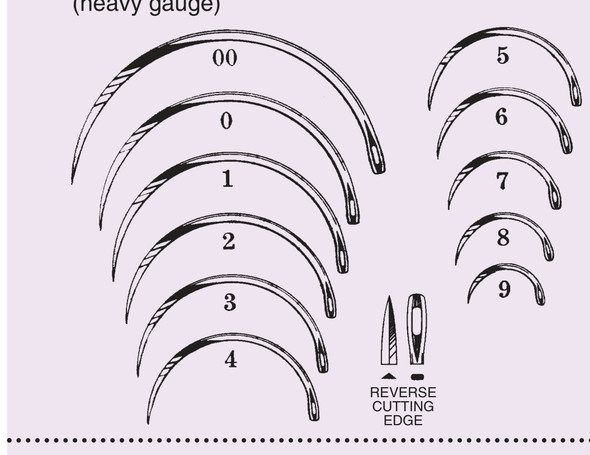
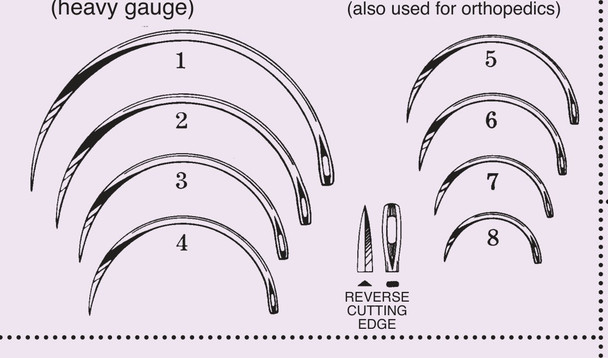
The Martin Uterine is a heavy gauge, half circle, reverse cutting pattern in sizes 1 to 8, and Anchor prints the note that has followed it for years: also used for orthopedics. An edge on the outer curve means the needle cuts where the suture will lie, which keeps the channel and the thread in register.
The half circle arc lets the wrist roll the needle through a deep or confined field and bring the point back out on line. Every Anchor needle is flattened along part of the shank, and the holder is applied on that flat about a quarter of the needle length from the eyed end, so the needle cannot turn in the jaws mid-pass. Anchor Products Company has made eyed surgical needles in Addison, Illinois since 1925, and this pattern comes from that same specialist line.
Features and Benefits
Needle Design
- Pattern: Martin Uterine, Anchor style 1860
- Point: Reverse Cutting Edge
- Curve: 1/2 Circle
- Gauge: Heavy Gauge wire
- Eye: Closed eye, threaded in the standard way
Handling and Supply
- Holder Grip: Flat section on the shank, clamped about 1/4 of the needle length from the eye
- Sterile Packaging: Units of two, double-pouched in see-through peel-apart Tyvek pouches
- Reusable Packaging: Purple glassine envelope and sleeve marked with quantity, style and size
Product Specifications
Needle Specifications
- Needle Type: Eyed suture needle
- Style Number: 1860
- Pattern: Martin Uterine
- Curve: 1/2 Circle
- Point: Reverse Cutting Edge
- Gauge: Heavy Gauge
- Full Size Range: Sizes 1 to 8
- Sizes in This Listing: Sizes 2, 3, 4, 5, 6, 7 and 8 in this listing
Packaging and Contents
- Supplied As: Sterile and Reusable
- Pack Configurations: BX/20, BX/40, BX/72, CT/20, DZ/12 by option
- Sterile Packaging: Units of two in double Tyvek peel-apart pouches
- Reusable Packaging: Non-sterile, purple glassine envelope and printed sleeve
Compare the rest of the Suture and Needles range, or shop the complete Anchor Products catalog.
Why the Martin Uterine Serves Two Services
A named pattern on a preference card is a promise about how the needle will behave. Keeping the real Anchor version in stock is how that promise is kept.
- Reverse Cutting Edge Handling – an outer-curve edge that slices a clean channel for the suture – the pass feels the way the pattern promises
- Ready Sterile Stock – sterile pairs go straight from shelf to field – no preparation step before the case
- One Pattern, Two Services – one pattern, two services: the maker's own note places this style in orthopedic work as well as gynecologic, which few patterns can claim – so there is no substitute-pattern compromise at the field
- Full-Scale Sizing – Anchor prints every size at actual scale in its catalog – sizing can be confirmed against a needle already in hand
- Made by the Specialist – eyed needles are the only product Anchor Products Company makes – the pattern has been refined, not reinvented
Manuals and Troubleshooting Guides
FAQs
Is this needle sterile or reusable?
Both, depending on the option chosen. Sterile single use configurations sit alongside the non-sterile reusable version of the same pattern on this page.
How is the needle held during a pass?
It is clamped on the flat of the shank, about a quarter of the needle's length from the eyed end. That flat is ground into every Anchor needle so the holder gets a positive seat. Surgeons notice the difference the first time a needle refuses to roll.
What does the reverse cutting edge do in tissue?
The edge does the cutting on the outside of the curve, so the needle advances through resistant tissue with less force. That is what the point was designed to do, pass after pass.
How do I confirm the right size?
Anchor prints every needle in its catalog at full scale, so the printed size can be compared directly against a needle in hand before an order is placed. The specification section on this page carries the sizes this listing covers.
How are the sterile needles packed?
Each sterile pair is double-pouched in Tyvek with a see-through, peel-apart design, so presentation to the field is quick and the needles are visible first. Pairs keep counts simple when the tray is checked at the end of the case.
Are the reusable needles ready to use from the envelope?
No. Non-sterile reusables arrive in purple glassine envelopes with a sleeve printed with quantity, style and size, ready for the facility's own preparation. The facility cleans, inspects and sterilizes them before they go on a tray, following its reusable-instrument protocol.
Can this needle be used in orthopedic work?
Yes. Anchor prints a note against this style that it is also used for orthopedics, which is why two different services stock the same pattern. The heavy gauge wire is part of what makes that crossover practical.