


Description
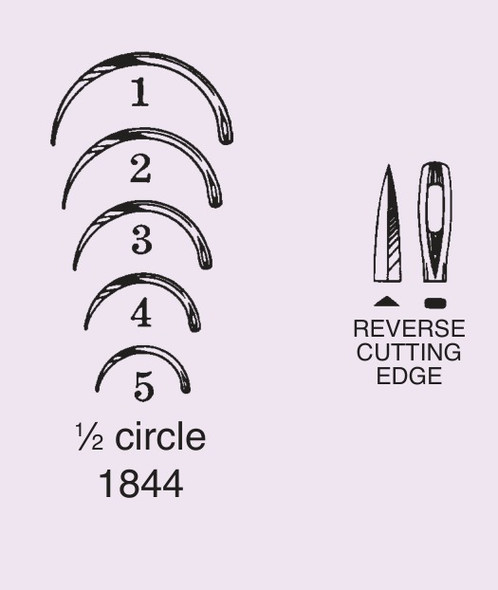
The Anchor Regular Surgeon's Suture Needles are Anchor's Regular Surgeon's pattern: a half circle reverse cutting edge eyed needle supplied in sterile single use form. Where the tissue is finer and the pass should be lighter, this light gauge version of the Regular Surgeon's pattern keeps the familiar shape on slimmer wire. When a preference card names this pattern, having the genuine Anchor version on the shelf keeps the tray consistent.
- Reverse Cutting Edge – an outer-curve edge that slices a clean channel for the suture
- 1/2 Circle Shape – a half circle sweep for deep or confined fields
- Flat Shank Grip – a flattened shank section gives the holder a positive seat and stops rotation mid-pass
- Sterile Single Use – double-pouched Tyvek pairs, ready for the field
Light Gauge Wire for Delicate Half Circle Passes
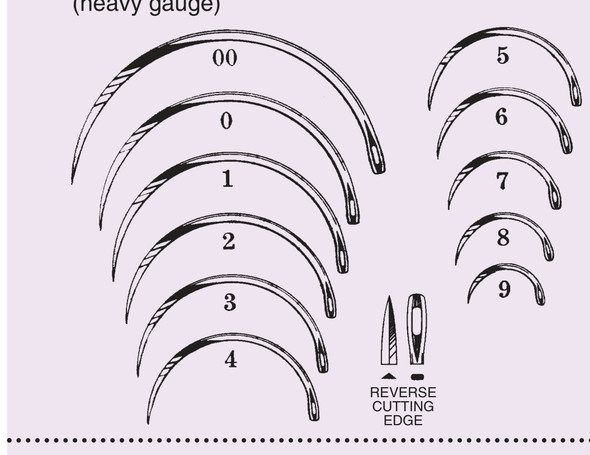
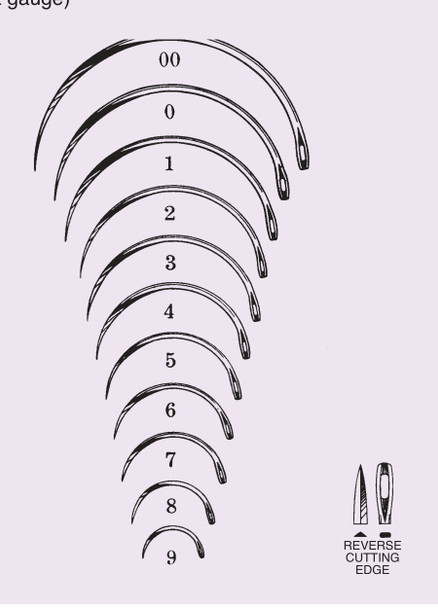
Anchor draws the Regular Surgeon's pattern a second way: a half circle on light gauge wire, running 00 through 9, for work where a standard wire would be more needle than the tissue wants. Reverse cutting geometry was developed for tissue that tears rather than parts, and the edge does the work a plain point cannot.
Half circle geometry balances reach and control, which is why more patterns in the catalog use it than any other arc. Clamping on the flat of the shank, roughly a quarter of the length from the eye, stops the needle twisting under load. This is a specialist's needle, drawn from a catalog Anchor Products Company has refined in Addison, Illinois since 1925.
Features and Benefits
Needle Design
- Pattern: Regular Surgeon's, Anchor style 1834
- Point: Reverse Cutting Edge
- Curve: 1/2 Circle
- Gauge: Light Gauge wire
- Eye: Closed eye, threaded in the standard way
Handling and Supply
- Holder Grip: Flat section on the shank, clamped about 1/4 of the needle length from the eye
- Sterile Packaging: Units of two, double-pouched in see-through peel-apart Tyvek pouches
Product Specifications
Needle Specifications
- Needle Type: Eyed suture needle
- Style Number: 1834
- Pattern: Regular Surgeon's
- Curve: 1/2 Circle
- Point: Reverse Cutting Edge
- Gauge: Light Gauge
- Full Size Range: Sizes 00 and 0 to 9
- Sizes in This Listing: Sizes 00, 4, 7 and 9 in this listing
Packaging and Contents
- Supplied As: Sterile Single Use
- Pack Configurations: BX/40, CT/20 by option
- Sterile Packaging: Units of two in double Tyvek peel-apart pouches
Find companion patterns in Suture and Needles, or see everything Anchor Products makes.
Why Light Gauge Wire Suits Finer Work
A preference-card staple earns its place by behaving the same way in every hand. The forms and sizes on this page are the real Anchor configurations, sourced through McKesson.
- Reverse Cutting Edge Handling – the edge sits on the outside of the curve, where firm tissue needs it – the pass feels the way the pattern promises
- Ready Sterile Stock – sterile pairs go straight from shelf to field – no preparation step before the case
- Finer Wire, Same Pattern – light gauge is the distinction here: the same trusted pattern and point, drawn on finer wire than its 3/8 circle sibling – which is exactly what a named-pattern request means
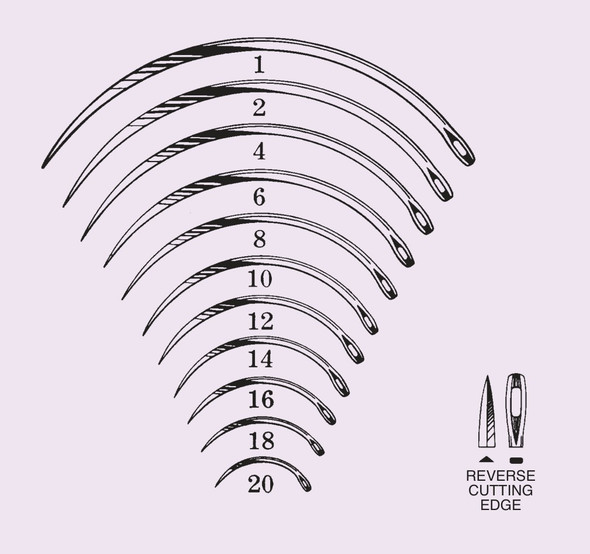
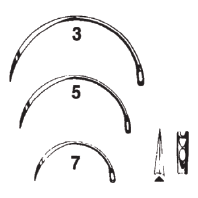
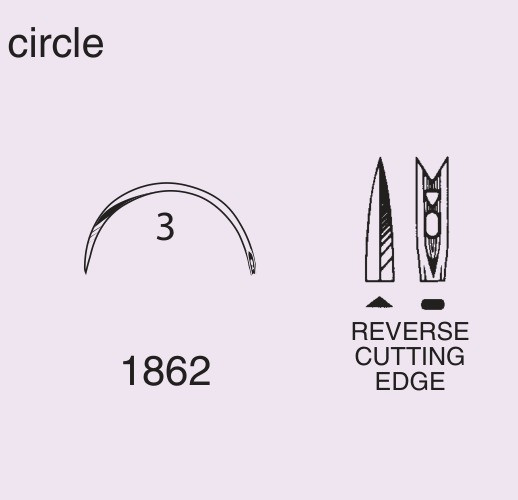
- True-to-Life Illustrations – the maker's catalog draws each needle at full scale – no guesswork when a tray is standardized
- A Century on One Product – Anchor has made eyed needles in Illinois since 1925 – that focus shows in the consistency of the line
Manuals and Troubleshooting Guides
FAQs
Is this needle sterile or reusable?
This listing is the sterile single use form of the pattern. The needles are packed sterile in pairs and are discarded after the case.
How is the needle held during a pass?
Grip the flat of the shank, about one quarter of the length from the eye. That is the seat the maker grinds into the shank for the holder. Once felt, the flat seat is hard to give up.
What does the reverse cutting edge do in tissue?
It cuts its own channel as it travels, the behavior surgeons want when a taper point would tear rather than pass. Teams standardize on it because the behavior is predictable.
How do I confirm the right size?
The full-scale illustrations in the Anchor catalog exist for exactly this question: hold a familiar needle to the page and read off its size. The configurations stocked here are set out in the specifications on this page.
How are the sterile needles packed?
Pairs are the unit: two needles, double-pouched in Tyvek, with a transparent face and a peel-apart seal. Peel-apart pouches open cleanly at the field, without scissors or tearing.