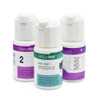



Description
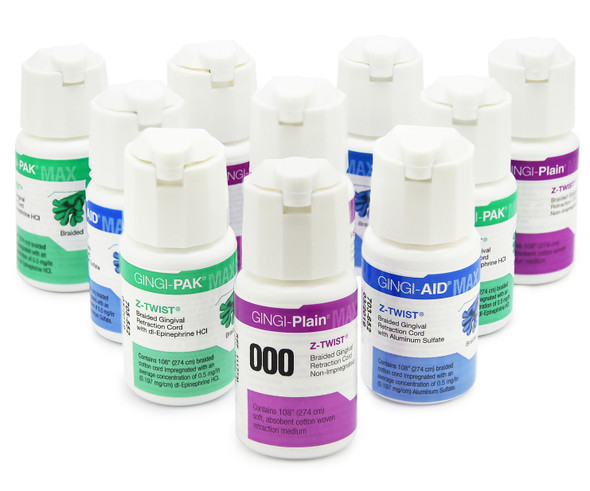
Gingi-Pak Soft-Twist Retraction Cord is a firmly twisted 100% cotton cord that packs easily and stays where it is placed until the clinician removes it. Three sizes cover the sulcus range, in epinephrine-impregnated and plain versions.
- Firmly twisted construction – the twist packs cleanly and holds together during placement
- Absorbent and supple – the cotton conforms to the sulcus and remains in place until removal
- Three graded sizes – sizes 1, 2 and 3 for fine through heavy displacement needs
- Consistent epi dosage – impregnated cords deliver 0.5 mg of solution per linear inch, hand-impregnated
Firmly Twisted Cord That Packs Fast and Stays Put
A twisted cord's virtue is cooperation: it slides into the sulcus under the packer, holds its form, and waits there instead of springing back out. This MAX cord is firmly twisted for exactly that behavior, while remaining absorbent and pliable enough to conform to the sulcus anatomy. It suits all retraction techniques, including the two-cord technique used for deeper displacement. The epinephrine version is hand-impregnated for a consistent 0.5 mg of solution per linear inch with no dry spots, and the plain version takes the hemostatic of the clinician's choice. Every bottle carries 108 inches of cord behind a Kutter Kap cutter.
Features and Benefits
Cord Handling
- Easy packing – the firm twist resists fraying and shredding under the packer
- Stays placed – the cord remains in the sulcus until the clinician removes it
- Absorbent body – cotton takes up fluid and carries impregnated solution evenly
Sizes and Versions
- Graded sizes – No. 1, No. 2 and No. 3 cover fine to substantial displacement
- Two chemistries – epinephrine-impregnated Gingi-Pak or plain Gingi-Plain in every size
- Full-length value – 108 inches (274 cm) per bottle under a Kutter Kap cap
Product Specifications
Product Facts
- Material – 100% cotton retraction cord, firmly twisted
- Sizes – No. 1, No. 2, No. 3
- Dosage (impregnated) – 0.5 mg of dl-epinephrine solution per linear inch, hand-impregnated
- Bottle length – 108 inches (274 cm) per bottle
Ordering Information
- Epinephrine – No. 1 = 10105M, No. 2 = 10110M, No. 3 = 10115M
- Plain – No. 1 = 11105M, No. 2 = 11110M, No. 3 = 11115M
- Techniques – suitable for all retraction techniques including the two-cord technique
Pair the plain sizes with the hemostatic of your choice from our dental supplies range, and compare the loose-wound and braided cords on the Gingi-Pak brand page.
Why Choose Soft-Twist Retraction Cord
Soft-Twist is the workhorse choice for clinicians who pack cord all day and want it to behave. The twist trades the original cord's adjustability for speed and placement reliability. In a busy crown and bridge schedule, that trade is usually the right one.
- Faster packing – a firm twist goes in cleanly instead of unraveling at the packer tip
- Reliable retention – cord stays seated through impression preparation and removal timing
- Complete size run – all three sizes in both chemistries from one reorder list
- Dosage consistency – hand impregnation avoids the dry spots of machine-treated cord
Manuals and Troubleshooting Guides
Frequently Asked Questions
How do the sizes compare?
No. 1 is the finest, No. 2 the mid-size and No. 3 the heaviest displacement. Each size comes in epinephrine-impregnated and plain versions.
What dosage does the epinephrine cord deliver?
It is hand-impregnated to deliver a consistent 0.5 mg of solution per linear inch. The manufacturer emphasizes there are no dry spots along the length.
Does the cord stay in place?
Yes, the firmly twisted cotton is absorbent and supple, conforms to the sulcus, and remains in place until removed. That behavior suits it to the two-cord technique as well.
How much cord is in each bottle?
Each bottle holds 108 inches (274 cm) of cord. The Kutter Kap cap cuts lengths cleanly and seals the bottle.
When should I choose plain over impregnated?
Choose plain when you prefer to apply your own hemostatic solution, such as aluminum chloride or ferric sulfate. Choose impregnated when you want hemostasis built into the cord itself.