
Professional Use
The Professional Use category encompasses a wide range of tools and supplies essential for healthcare professionals, educators, and clinical environments. These products are meticulously designed to support diagnostic, educational, and procedural needs across medical disciplines. From anatomical models for teaching to diagnostic tools like stethoscopes and otoscopes, this category ensures precision, reliability, and efficiency in professional settings.
Why Professional Use Tools Are Essential
Healthcare professionals rely on accurate, durable, and high-quality tools to deliver optimal care. Professional-use supplies help ensure precise diagnoses, effective patient education, and seamless procedural execution. These tools also enable educators to train future medical practitioners with realistic and practical equipment.
Types of Professional Use Products
1. Anatomical Models
Best for: Medical education and patient demonstrations.
Anatomical models are detailed, lifelike replicas of the human body or specific organs, used to teach anatomy and explain medical conditions or procedures.
Key Features
- Realistic designs with accurate anatomical details.
- Durable materials for repeated use.
- Variety of models, including full-body, organ-specific, and skeletal systems.
- Removable parts for hands-on learning.
Applications
- Medical schools and healthcare training programs.
- Patient education to explain diagnoses or surgical procedures.
- Teaching anatomy to students in biology or healthcare courses.
2. Doppler and Ultrasound Gels
Best for: Enhancing ultrasound and Doppler imaging accuracy.
Doppler and ultrasound gels ensure clear imaging by eliminating air pockets between the probe and the skin. These gels are essential for high-quality diagnostic imaging.
Key Features
- Non-irritating, hypoallergenic formulas.
- Water-soluble for easy cleanup.
- Available in various sizes, from single-use packets to large dispensers.
- Ensures consistent acoustic transmission.
Applications
- Ultrasound imaging in diagnostic clinics.
- Fetal monitoring during pregnancy.
- Vascular studies using Doppler devices.
3. Dopplers
Best for: Monitoring blood flow and fetal heart rates.
Dopplers are handheld devices that use ultrasound to detect and measure blood flow or fetal heartbeats, making them vital in prenatal care and vascular studies.
Key Features
- Compact, portable designs for bedside use.
- High-frequency probes for clear sound quality.
- Rechargeable battery options for continuous use.
- LCD displays for real-time readings.
Applications
- Obstetrics to monitor fetal heart rates.
- Vascular studies to assess blood flow in arteries and veins.
- Emergency settings for quick diagnostics.
4. Educational Supplies
Best for: Training medical students and professionals.
Educational supplies include tools, kits, and learning aids designed to enhance medical training and simulation.
Key Features
- Models and simulators for hands-on practice.
- Visual aids like charts and diagrams.
- Kits for learning basic medical procedures, such as suturing or IV insertion.
- Durable materials for repeated use in classrooms.
Applications
- Medical and nursing school programs.
- Continuing education for healthcare professionals.
- Patient education in clinical environments.
5. Manometers
Best for: Measuring pressure in medical procedures.
Manometers are instruments used to measure pressure in various applications, such as blood pressure monitoring or respiratory therapy.
Key Features
- High-precision gauges for accurate pressure readings.
- Durable construction for repeated clinical use.
- Portable designs for flexibility in different settings.
Applications
- Blood pressure monitoring with manual sphygmomanometers.
- Respiratory therapy for assessing airway pressure.
- Laboratory experiments requiring pressure measurements.
6. Otoscopes
Best for: Examining the ears and diagnosing ear-related conditions.
Otoscopes are handheld devices used to inspect the ear canal and tympanic membrane for infections or blockages.
Key Features
- Bright LED or halogen lights for clear visibility.
- High-resolution lenses for detailed imaging.
- Compact, lightweight designs for portability.
- Disposable specula for hygiene.
Applications
- Routine ear examinations in clinics and hospitals.
- Pediatric care to diagnose ear infections.
- Emergency settings for quick diagnostics.
7. Pen Lights
Best for: Examining the eyes, throat, and other small areas.
Pen lights are compact, portable lighting devices used in medical examinations to check pupil response, throat health, and more.
Key Features
- Bright LED or halogen bulbs for focused lighting.
- Pocket clips for easy access.
- Long battery life for extended use.
- Lightweight and portable designs.
Applications
- Neurological exams to check pupil response.
- Throat and oral cavity inspections.
- General use in hospitals, clinics, and emergency settings.
8. Stethoscopes
Best for: Auscultating heart, lung, and bowel sounds.
Stethoscopes are indispensable diagnostic tools for listening to internal body sounds. Available in various types, including cardiology and pediatric models, they cater to specific clinical needs.
Key Features
- Dual-head or single-head designs for versatile use.
- High acoustic sensitivity for clear sound.
- Lightweight yet durable construction.
- Pediatric and neonatal versions with smaller diaphragms.
Applications
- Diagnosing cardiac or respiratory conditions.
- Routine physical exams in clinics or hospitals.
- Pediatric care for listening to heart or lung sounds in infants.
9. Vaginal Speculums
Best for: Gynecological examinations and procedures.
Vaginal speculums are tools used to open the vaginal walls for visual examination or procedures such as Pap smears.
Key Features
- Reusable and disposable options for hygiene and convenience.
- Adjustable designs for better visibility and access.
- Smooth, non-irritating materials for patient comfort.
- Sterilized options for clinical use.
Applications
- Routine gynecological exams in clinics.
- Procedures like Pap smears or IUD insertions.
- Emergency room assessments for reproductive health concerns.
Key Features of Professional Use Products
- High-Quality Materials: Designed to withstand frequent use in clinical environments.
- Accuracy and Precision: Essential for reliable diagnostics and effective procedures.
- Versatility: Suitable for a wide range of medical disciplines and patient needs.
- Portability: Compact and lightweight options for mobile healthcare providers.
- Hygiene and Safety: Includes disposable and sterilized options to minimize contamination.
Benefits of Professional Use Products
1. Enhanced Patient Care
Accurate and reliable tools ensure high-quality diagnostics and procedures.
2. Effective Training
Educational supplies and anatomical models improve medical training and skill development.
3. Versatility in Use
Covers multiple specialties, from gynecology to cardiology and pediatrics.
4. Convenience for Professionals
Portable and user-friendly designs make everyday tasks more efficient.
5. Hygiene and Safety
Disposable and sterilized tools reduce the risk of infections.
Real-World Uses
- Clinics and Hospitals: Routine exams, diagnostics, and patient education.
- Medical Schools: Training future healthcare professionals with realistic tools.
- Mobile Healthcare: Portable tools for fieldwork or home visits.
- Emergency Rooms: Quick, reliable diagnostics in critical situations.
- Specialty Care: Tools for gynecology, pediatrics, cardiology, and more.
How to Choose the Right Professional Use Products
- Intended Use: Select tools tailored to specific medical disciplines or procedures.
- Quality and Durability: Opt for high-quality materials to ensure long-term performance.
- Hygiene: Consider disposable options for enhanced infection control.
- Portability: Choose lightweight, compact designs for mobile healthcare needs.
- Certification: Ensure products meet industry standards for safety and reliability.
Frequently Asked Questions (FAQs)
1. Are anatomical models accurate?
Yes, most anatomical models are designed with precise details to ensure realistic training and education.
2. Can pen lights be used for neurological exams?
Yes, pen lights are commonly used to assess pupil response during neurological evaluations.
3. Are disposable vaginal speculums safe?
Yes, disposable speculums are sterilized and designed for single-use to ensure hygiene.
4. How do Doppler devices work?
Dopplers use ultrasound waves to detect and measure blood flow or fetal heartbeats.
5. Are otoscope specula reusable?
Most otoscope specula are disposable, but reusable options are available and must be sterilized after each use.
Related Products
Explore diagnostic kits, educational models, and clinical-grade monitoring tools to enhance your professional setup. Visit our blog for insights into choosing the best tools for your practice.
Equip your clinic or practice with Professional Use Tools. From anatomical models to Dopplers, find reliable and high-quality supplies to meet your needs.
Shop By Category
-

Schiller Snap-Clip Adapters for Resting ECG Patient Cables, Pack of 10 Adapters for Snap Electrode Use
Schiller
$149.99The Schiller Snap-Clip Adapters adapts a banana-plug resting ECG patient cable to snap electrodes, in a pack of 10 adapters. It is made for ECG departments that run snap electrodes on banana-plug...- SKU:
- 2.155032
$149.99 -

Schiller Reusable Nose Clip for Spirometry Testing, Sold in Packs of 50 and 100 for Lung Function Studies
Schiller
$98.99 - $144.99The Schiller Reusable Nose Clip seals the nose during spirometry so the patient breathes only through the mouthpiece and the measured volumes stay true. It is made for spirometry labs that keep nose...$98.99 - $144.99 -

Schiller ISA Sidestream Gas Analyzer for CO2, N2O and Anesthetic Agent Monitoring with Agent Identification
Schiller
$3,230.99 - $13,046.99The Schiller ISA Sidestream Analyzer is a sidestream gas analyzer platform offered in CO2-only and multi-gas configurations with anesthetic agent identification. It is made for operating rooms and...$3,230.99 - $13,046.99 -


Schiller TMX-428 CP Medical Treadmill with Control Panel for Stress Testing, 500 lb Capacity and Safety Tether
Schiller
$12,069.99The Schiller TMX-428 CP adds a control panel to the TMX-428 medical treadmill platform for stress testing. It is made for stress labs that want the TMX-428 treadmill with its own control panel at the...$12,069.99 -


Schiller TMX-428 Medical Treadmill for Stress Testing with 500 lb Capacity, Low-Profile Deck and Safety Tether
Schiller
$9,270.99The Schiller TMX-428 is a heavy-duty medical treadmill engineered for stress systems, with a 500 lb user capacity and a deck only 7 inches off the floor. It is made for stress labs that need a...$9,270.99 -
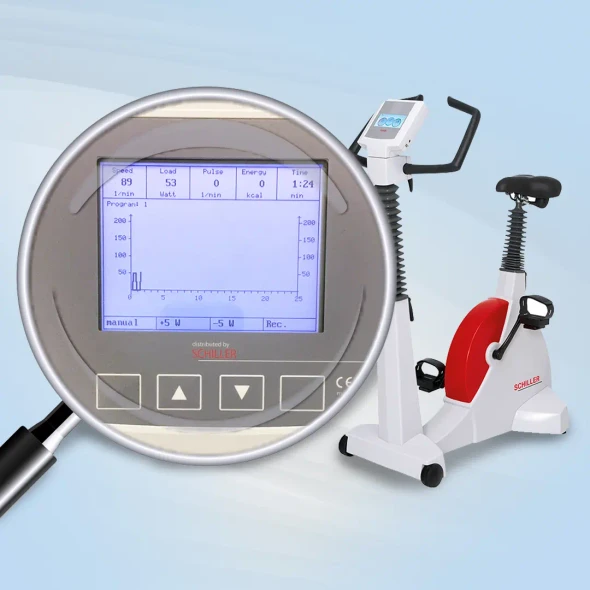
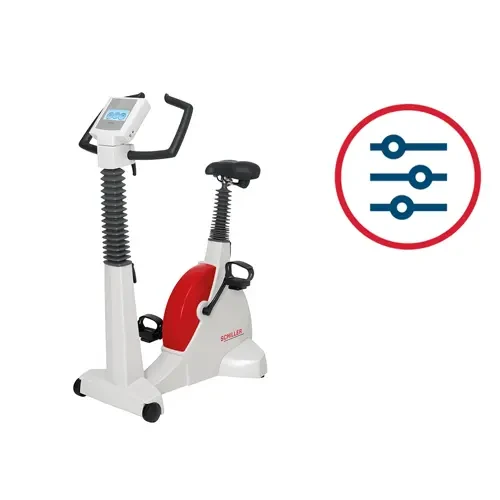
Schiller ERG 911 S Plus Exercise Ergometer Bicycle with Speed-Independent Load and Pivoting Graphical Display
Schiller
$10,649.99The Schiller ERG 911 S Plus delivers speed-independent workloads from 20 to 999 watts under the control of a Schiller exercise ECG system. It is made for stress labs and rehabilitation programs that...- SKU:
- 2.210100
$10,649.99 -


Schiller SpiroScout PC-Based Ultrasonic Spirometry System with LFX Software and Calibration-Free Sensor
Schiller
$2,365.99 - $4,049.99The Schiller SpiroScout measures lung function with an ultrasonic sensor that never needs calibration, and reports through the LFX software for Windows. It is made for pulmonology and primary care...$2,365.99 - $4,049.99 -


Schiller medilog AR Holter ECG Recorder and Office Packages with DARWIN2 Analysis Software and Activation
Schiller
$3,724.99 - $24,082.99The Schiller medilog AR records long-term ECG for up to 14 days on a single AAA battery and analyses it with the medilog DARWIN2 software. It is made for cardiology practices and Holter labs that...$3,724.99 - $24,082.99 -
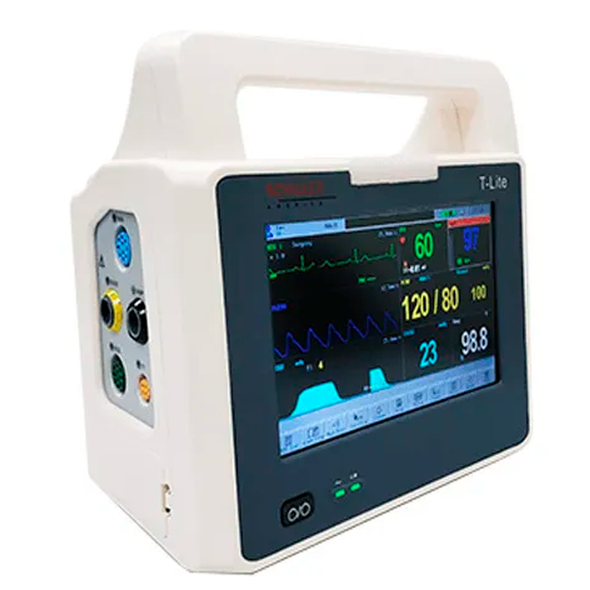

Schiller T-Lite Patient Monitor with Touchscreen, ECG, NIBP and SpO2 for Basic Bedside Monitoring
Schiller
$2,891.99 - $7,211.99The Schiller T-Lite keeps basic monitoring simple with large numerics on a 20.3 cm touchscreen and preconfigured parameter sets. It is made for wards, clinics and step-down units that need dependable...$2,891.99 - $7,211.99 -


Schiller Tranquility VS Vital Signs Monitor with 5 Inch Touchscreen, Built-In Battery and Parameter Options
Schiller
$1,432.99 - $4,086.99The Schiller Tranquility VS packs vital signs monitoring into a compact, lightweight unit with a 5 inch touchscreen and a built-in battery. It is made for clinics, wards and step-down areas that need...$1,432.99 - $4,086.99 -


Schiller Tranquility II Multiparameter Patient Monitor with ECG, NIBP, SpO2 and Touchscreen Options
Schiller
$3,540.99 - $16,752.99The Schiller Tranquility II monitors up to nine parameters with up to 72 hours of trend data on adult, pediatric and neonatal patients. It is made for surgery, intensive care, PACU, recovery and...$3,540.99 - $16,752.99 -
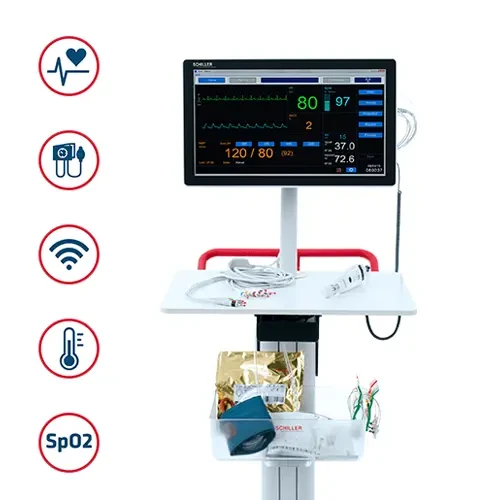
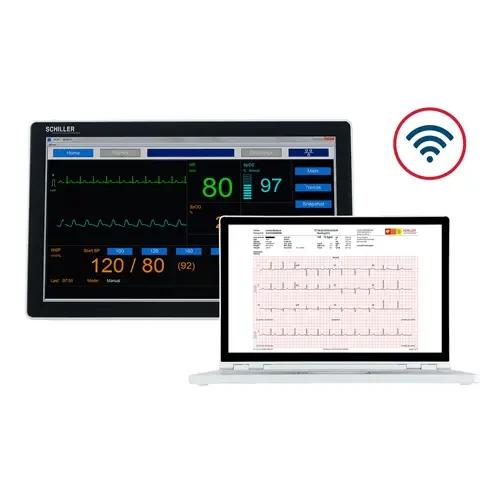
Schiller Diagnostic Station DS20 All-in-One Vitals and Resting ECG Station with Touchscreen and Masimo SpO2
Schiller
$9,428.99 - $14,101.99The Schiller Diagnostic Station DS20 combines vital signs measurement and resting ECG with interpretation in one touchscreen station. It is made for clinics, wards and admission areas that want...$9,428.99 - $14,101.99 -
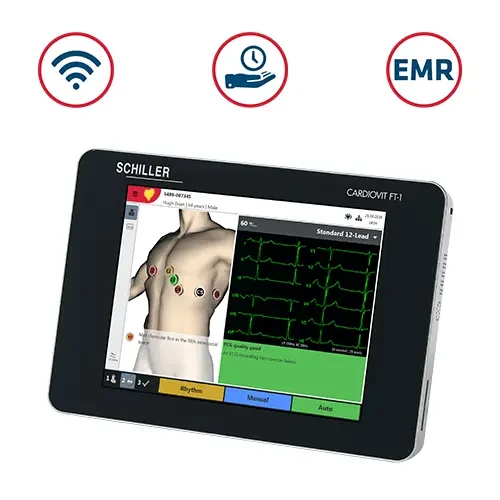
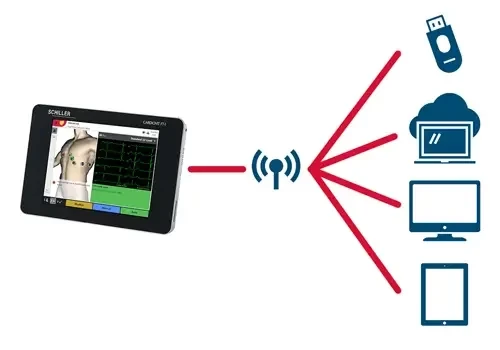
Schiller CARDIOVIT FT-1 Portable Resting ECG Machine with 8 Inch Multi-Touch Display and Wireless Connectivity
Schiller
$3,747.99 - $9,320.99The Schiller CARDIOVIT FT-1 puts a complete 12-lead resting ECG workstation on an 8 inch high-resolution multi-touch display in an ultra-portable body. It is made for clinics, hospital wards and...$3,747.99 - $9,320.99 -
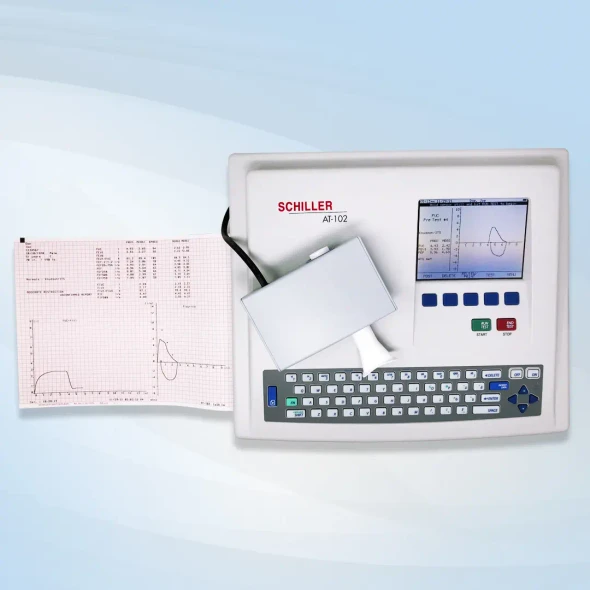
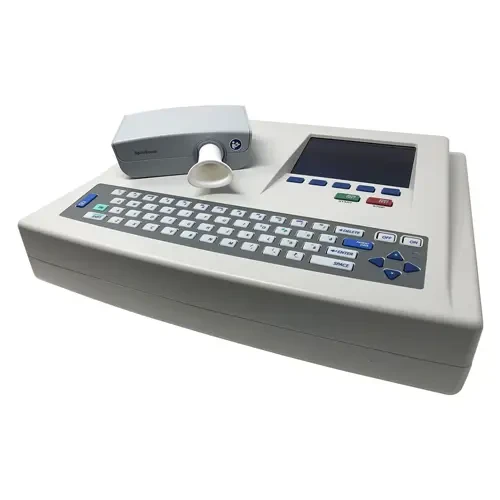
Schiller CARDIOVIT AT-102 SCM Resting ECG Machine with Ethernet Data Transfer and Optional Spirometry Sensor
Schiller
$4,286.99 - $5,940.99The Schiller CARDIOVIT AT-102 SCM pairs one-key resting ECG operation with the SCHILLER Communications Module, which moves recordings to network systems over Ethernet. It is made for practices that...$4,286.99 - $5,940.99 -
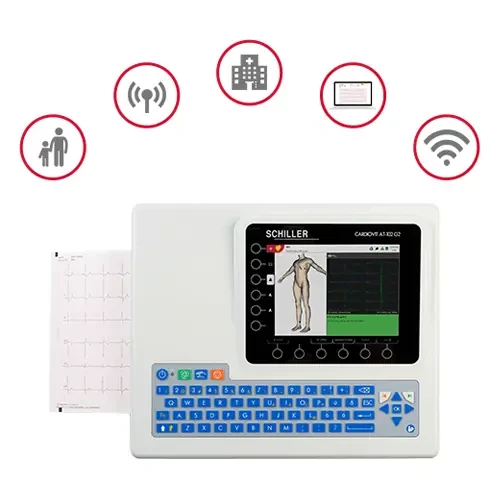
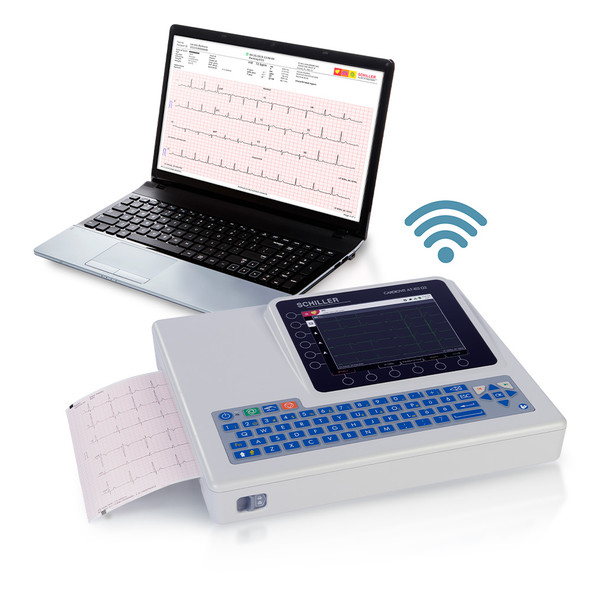
Schiller CARDIOVIT AT-102 G2 Resting ECG Machine with Interpretation, 8 Inch Touch Display and Thermal Printer
Schiller
$4,960.99 - $9,841.99The Schiller CARDIOVIT AT-102 G2 records 12-lead resting and rhythm ECGs on an 8 inch colour display with touch function keys and a sealed alphanumeric keyboard. It is made for cardiology practices,...$4,960.99 - $9,841.99 -

ADC Adlite Plus Disposable Penlight, Sealed Concentric Beam, Pocket Clip Activation, Cylinder of 22
ADC
$110.99The Adlite Plus Penlight is a sealed-beam disposable diagnostic penlight that switches on by depressing its pocket clip, so a pupil check starts the second it leaves the pocket. This cylinder packs...$110.99 -
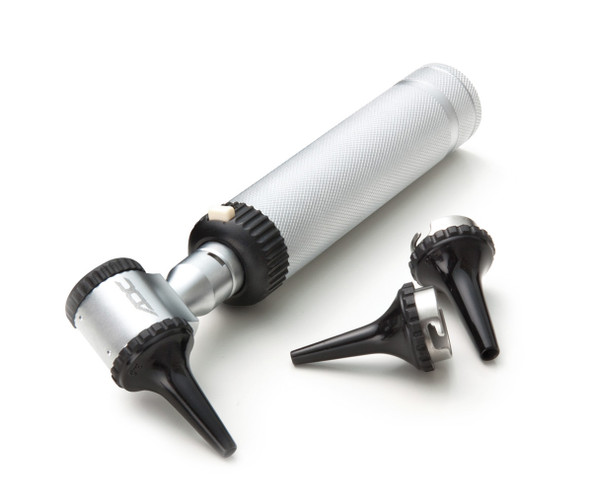
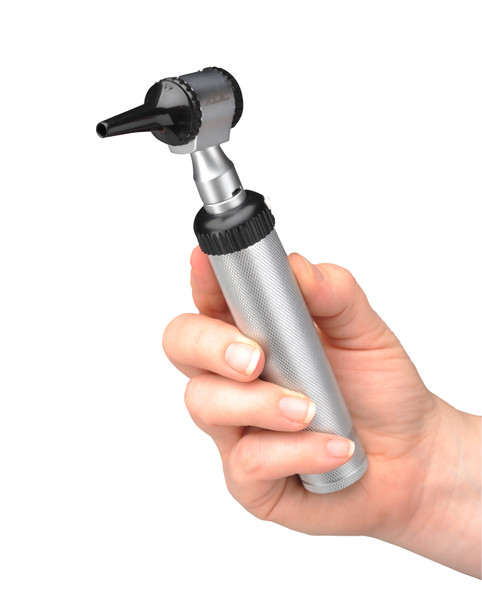
ADC Proscope 5211 Replacement Viewing Lens, 3X Magnifying Lens for the Proscope 5211 Standard Otoscope
ADC
$31.99The Proscope 5211 Viewing Lens restores the magnified view on a Proscope 5211 standard otoscope, replacing the removable 3X lens that scratches, clouds, or walks away over years of service. It is the...$31.99 -
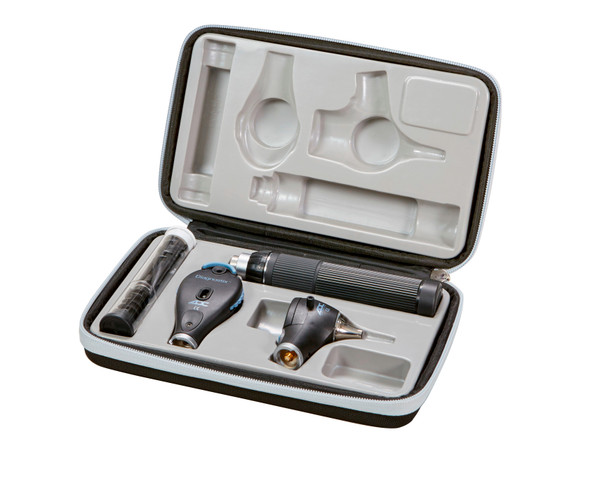
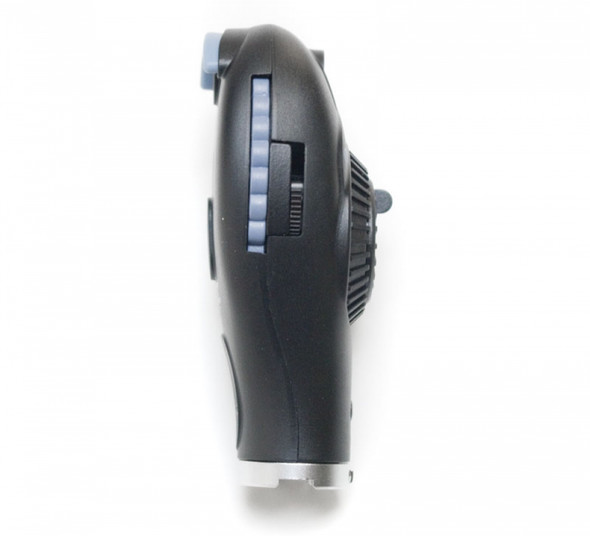
ADC Diagnostix 3.5V Portable Diagnostic Set with PMV Otoscope and Coax Plus Ophthalmoscope, USB Rechargeable
ADC
$1,156.99The Diagnostix 3.5V Portable Diagnostic Set pairs the PMV otoscope with the Coax Plus ophthalmoscope on one rechargeable handle, covering the two exams every diagnostic round depends on. Both heads...$1,156.99 -


ADC Diagnostix 5481 PMV Otoscope Set with 3.5V Rechargeable Handle, Panoramic Magnified View, Padded Case
ADC
$949.99 - $983.99The Diagnostix 5481 Portable PMV Otoscope Set shows the ear canal the way wall systems promise and pocket scopes rarely deliver: a panoramic view with twice the field and 66 percent greater...$949.99 - $983.99 -


ADC Diagnostix 5111N Pocket Otoscope with 3X Swivel Lens, Xenon or LED Lamp and Case Options
ADC
$186.99 - $304.99The Diagnostix 5111N Pocket Otoscope puts fiber-optic light and a 3X swivel lens in a pocket format, so the ear exam travels with the clinician instead of waiting at the wall unit. Choose xenon or...$186.99 - $304.99
About Professional Use
The Professional Use category encompasses a wide range of tools and supplies essential for healthcare professionals, educators, and clinical environments. These products are meticulously designed to support diagnostic, educational, and procedural needs across medical disciplines. From anatomical models for teaching to diagnostic tools like stethoscopes and otoscopes, this category ensures precision, reliability, and efficiency in professional settings.
Why Professional Use Tools Are Essential
Healthcare professionals rely on accurate, durable, and high-quality tools to deliver optimal care. Professional-use supplies help ensure precise diagnoses, effective patient education, and seamless procedural execution. These tools also enable educators to train future medical practitioners with realistic and practical equipment.
Types of Professional Use Products
1. Anatomical Models
Best for: Medical education and patient demonstrations.
Anatomical models are detailed, lifelike replicas of the human body or specific organs, used to teach anatomy and explain medical conditions or procedures.
Key Features
- Realistic designs with accurate anatomical details.
- Durable materials for repeated use.
- Variety of models, including full-body, organ-specific, and skeletal systems.
- Removable parts for hands-on learning.
Applications
- Medical schools and healthcare training programs.
- Patient education to explain diagnoses or surgical procedures.
- Teaching anatomy to students in biology or healthcare courses.
2. Doppler and Ultrasound Gels
Best for: Enhancing ultrasound and Doppler imaging accuracy.
Doppler and ultrasound gels ensure clear imaging by eliminating air pockets between the probe and the skin. These gels are essential for high-quality diagnostic imaging.
Key Features
- Non-irritating, hypoallergenic formulas.
- Water-soluble for easy cleanup.
- Available in various sizes, from single-use packets to large dispensers.
- Ensures consistent acoustic transmission.
Applications
- Ultrasound imaging in diagnostic clinics.
- Fetal monitoring during pregnancy.
- Vascular studies using Doppler devices.
3. Dopplers
Best for: Monitoring blood flow and fetal heart rates.
Dopplers are handheld devices that use ultrasound to detect and measure blood flow or fetal heartbeats, making them vital in prenatal care and vascular studies.
Key Features
- Compact, portable designs for bedside use.
- High-frequency probes for clear sound quality.
- Rechargeable battery options for continuous use.
- LCD displays for real-time readings.
Applications
- Obstetrics to monitor fetal heart rates.
- Vascular studies to assess blood flow in arteries and veins.
- Emergency settings for quick diagnostics.
4. Educational Supplies
Best for: Training medical students and professionals.
Educational supplies include tools, kits, and learning aids designed to enhance medical training and simulation.
Key Features
- Models and simulators for hands-on practice.
- Visual aids like charts and diagrams.
- Kits for learning basic medical procedures, such as suturing or IV insertion.
- Durable materials for repeated use in classrooms.
Applications
- Medical and nursing school programs.
- Continuing education for healthcare professionals.
- Patient education in clinical environments.
5. Manometers
Best for: Measuring pressure in medical procedures.
Manometers are instruments used to measure pressure in various applications, such as blood pressure monitoring or respiratory therapy.
Key Features
- High-precision gauges for accurate pressure readings.
- Durable construction for repeated clinical use.
- Portable designs for flexibility in different settings.
Applications
- Blood pressure monitoring with manual sphygmomanometers.
- Respiratory therapy for assessing airway pressure.
- Laboratory experiments requiring pressure measurements.
6. Otoscopes
Best for: Examining the ears and diagnosing ear-related conditions.
Otoscopes are handheld devices used to inspect the ear canal and tympanic membrane for infections or blockages.
Key Features
- Bright LED or halogen lights for clear visibility.
- High-resolution lenses for detailed imaging.
- Compact, lightweight designs for portability.
- Disposable specula for hygiene.
Applications
- Routine ear examinations in clinics and hospitals.
- Pediatric care to diagnose ear infections.
- Emergency settings for quick diagnostics.
7. Pen Lights
Best for: Examining the eyes, throat, and other small areas.
Pen lights are compact, portable lighting devices used in medical examinations to check pupil response, throat health, and more.
Key Features
- Bright LED or halogen bulbs for focused lighting.
- Pocket clips for easy access.
- Long battery life for extended use.
- Lightweight and portable designs.
Applications
- Neurological exams to check pupil response.
- Throat and oral cavity inspections.
- General use in hospitals, clinics, and emergency settings.
8. Stethoscopes
Best for: Auscultating heart, lung, and bowel sounds.
Stethoscopes are indispensable diagnostic tools for listening to internal body sounds. Available in various types, including cardiology and pediatric models, they cater to specific clinical needs.
Key Features
- Dual-head or single-head designs for versatile use.
- High acoustic sensitivity for clear sound.
- Lightweight yet durable construction.
- Pediatric and neonatal versions with smaller diaphragms.
Applications
- Diagnosing cardiac or respiratory conditions.
- Routine physical exams in clinics or hospitals.
- Pediatric care for listening to heart or lung sounds in infants.
9. Vaginal Speculums
Best for: Gynecological examinations and procedures.
Vaginal speculums are tools used to open the vaginal walls for visual examination or procedures such as Pap smears.
Key Features
- Reusable and disposable options for hygiene and convenience.
- Adjustable designs for better visibility and access.
- Smooth, non-irritating materials for patient comfort.
- Sterilized options for clinical use.
Applications
- Routine gynecological exams in clinics.
- Procedures like Pap smears or IUD insertions.
- Emergency room assessments for reproductive health concerns.
Key Features of Professional Use Products
- High-Quality Materials: Designed to withstand frequent use in clinical environments.
- Accuracy and Precision: Essential for reliable diagnostics and effective procedures.
- Versatility: Suitable for a wide range of medical disciplines and patient needs.
- Portability: Compact and lightweight options for mobile healthcare providers.
- Hygiene and Safety: Includes disposable and sterilized options to minimize contamination.
Benefits of Professional Use Products
1. Enhanced Patient Care
Accurate and reliable tools ensure high-quality diagnostics and procedures.
2. Effective Training
Educational supplies and anatomical models improve medical training and skill development.
3. Versatility in Use
Covers multiple specialties, from gynecology to cardiology and pediatrics.
4. Convenience for Professionals
Portable and user-friendly designs make everyday tasks more efficient.
5. Hygiene and Safety
Disposable and sterilized tools reduce the risk of infections.
Real-World Uses
- Clinics and Hospitals: Routine exams, diagnostics, and patient education.
- Medical Schools: Training future healthcare professionals with realistic tools.
- Mobile Healthcare: Portable tools for fieldwork or home visits.
- Emergency Rooms: Quick, reliable diagnostics in critical situations.
- Specialty Care: Tools for gynecology, pediatrics, cardiology, and more.
How to Choose the Right Professional Use Products
- Intended Use: Select tools tailored to specific medical disciplines or procedures.
- Quality and Durability: Opt for high-quality materials to ensure long-term performance.
- Hygiene: Consider disposable options for enhanced infection control.
- Portability: Choose lightweight, compact designs for mobile healthcare needs.
- Certification: Ensure products meet industry standards for safety and reliability.
Frequently Asked Questions (FAQs)
1. Are anatomical models accurate?
Yes, most anatomical models are designed with precise details to ensure realistic training and education.
2. Can pen lights be used for neurological exams?
Yes, pen lights are commonly used to assess pupil response during neurological evaluations.
3. Are disposable vaginal speculums safe?
Yes, disposable speculums are sterilized and designed for single-use to ensure hygiene.
4. How do Doppler devices work?
Dopplers use ultrasound waves to detect and measure blood flow or fetal heartbeats.
5. Are otoscope specula reusable?
Most otoscope specula are disposable, but reusable options are available and must be sterilized after each use.
Related Products
Explore diagnostic kits, educational models, and clinical-grade monitoring tools to enhance your professional setup. Visit our blog for insights into choosing the best tools for your practice.
Equip your clinic or practice with Professional Use Tools. From anatomical models to Dopplers, find reliable and high-quality supplies to meet your needs.