




Description
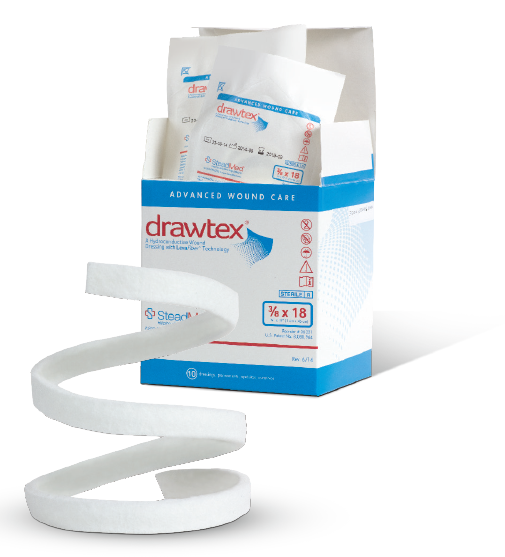
The Drawtex Hydroconductive Dressing pulls wound fluid out of the wound bed instead of simply soaking it up at the surface. Its LevaFiber Technology uses capillary action, electrostatic pull and dispersion to move exudate, debris and bacteria into and through the dressing, and each pad or roll can be cut to the size and shape the wound needs.
- Hydroconductive Draw – moves up to 150 cc of exudate per hour into and across the dressing structure.
- Debris and Bacteria Lift – draws fibrin, slough and bacteria away from the wound bed as fluid moves through the fibers.
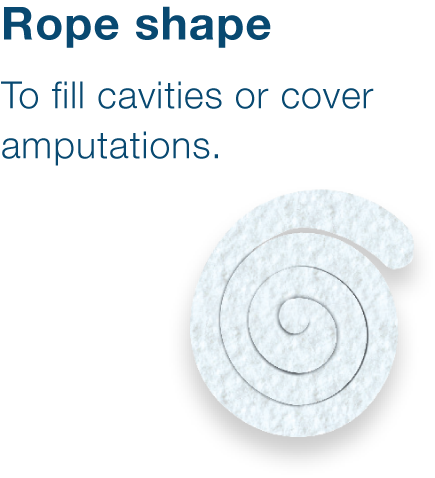
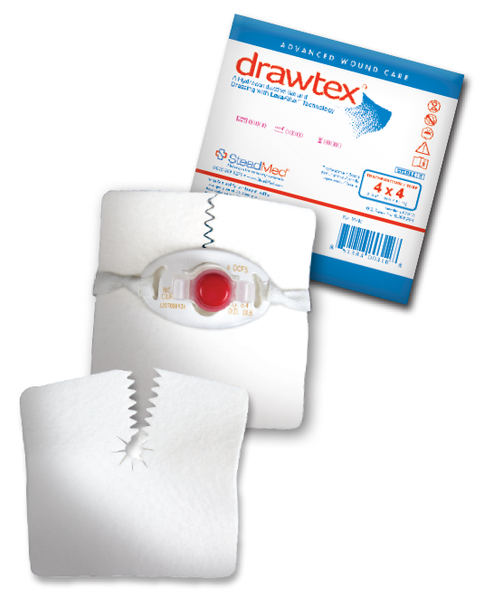
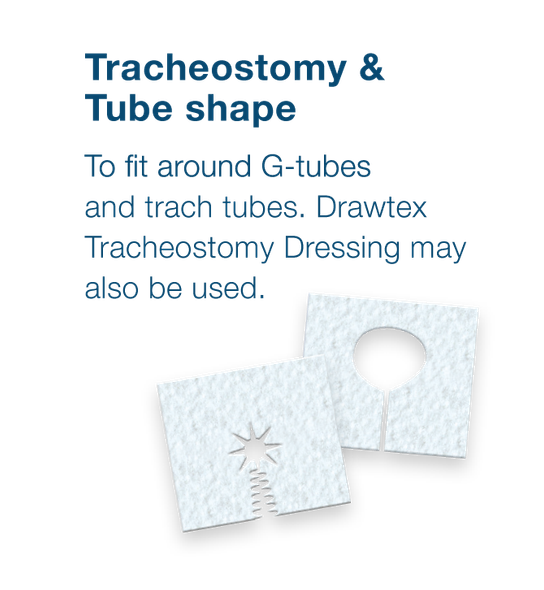
- Cut to Fit – trims to any size or shape, and either side can face the wound.
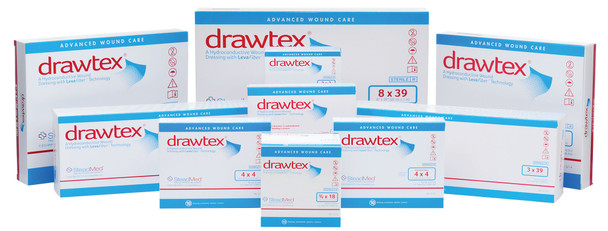
- Pads and Rolls – seven formats cover small wounds, large wounds and long limbs from one product family.
How Hydroconductive Action Cleans the Wound Bed
Drawtex is built from two complementary absorbent fiber structures blended from cotton, polyester and viscose. The first structure pulls fluid vertically into the dressing while the second spreads it horizontally, so exudate keeps moving away from the skin instead of pooling under the pad. That same movement carries wound debris, fibrin and slough into the dressing, which supports a cleaner wound bed between changes. The fibers also draw harmful matrix metalloproteinases, including MMP-9 and MMP-1, out of the wound fluid as it passes through. Because the dressing keeps working while fluid is present, it suits wounds with moderate to heavy drainage that overwhelm ordinary gauze or foam.
Features and Benefits
Hydroconductive Performance
- Exudate Handling: draws up to 150 cc of wound fluid per hour through capillary, electrostatic and dispersion forces.
- Bacterial Draw: lifts bacteria from the wound bed into the dressing as exudate moves through the fibers.
- Enzyme Reduction: removes MMP-9 and MMP-1 from wound fluid during wear.
Wound Types
- Acute Wounds: complex surgical wounds and first and second degree burns.
- Chronic Wounds: leg ulcers, diabetic foot ulcers and stage II to IV pressure ulcers.
- Drainage Level: made for wounds with moderate to heavy exudate.
Application
- Cutting and Placement: can be cut to size and shape, placed with either side against the wound, and layered when more capacity is needed.
- Change Frequency: change every 1 to 3 days, or as clinical evaluation directs.
- Cover Dressing: secure with a secondary dressing or bandage chosen for the wound.
Product Specifications
Dressing Details
- Dressing Type: Hydroconductive wound dressing with LevaFiber Technology
- Material: Cotton, polyester and viscose fiber blend
- Sterility: Sterile
- Sizes Available: 2 x 2 in (5 x 5 cm), 3.5 x 3.5 in (9 x 9 cm), 4 x 4 in (10 x 10 cm), 6 x 8 in (15 x 20 cm) and 8 x 8 in (20 x 20 cm) pads, plus 3.5 x 39 in (9 cm x 1 m) and 4 x 39 in (10 cm x 1 m) rolls
Packaging
- Quantity Per Pack: 10 dressings per box
- Manufacturer: Urgo Medical North America
Explore More: See all Advanced Wound Care | Shop more Urgo Medical Products
Why Clinicians Choose Drawtex for Heavy Drainage
Heavily draining wounds macerate skin and stall when fluid sits in the wound bed. This dressing keeps that fluid moving into its fibers, which protects the surrounding skin and supports steady progress between visits.
- Cleaner Wound Bed – debris, slough and bacteria leave the wound with the fluid, so each change starts from a cleaner surface.
- Fewer Saturated Dressings – high hourly uptake means the dressing keeps working through heavy drainage instead of leaking early.
- One Family, Many Shapes – cutting and layering let one box cover wounds that would otherwise need several specialty formats.
- Active, Not Passive – unlike dressings that only absorb on contact, the fibers pull fluid and contaminants toward the dressing on their own.
Frequently Asked Questions
How is this different from a regular absorbent dressing?
Regular dressings absorb fluid that reaches them, while this one actively draws fluid, debris and bacteria into and through its fiber structure. That hydroconductive pull is why it is chosen for wounds with moderate to heavy exudate.
Can the dressing be cut to fit a wound?
Yes, it can be cut to the size and shape needed, and either side can be placed against the wound. Pieces can also be layered when a wound needs more capacity.
How often should it be changed?
Changes typically happen every 1 to 3 days, guided by the amount of drainage and clinical evaluation. A saturated dressing should be replaced so the fibers can keep drawing fluid.
Which wounds is it made for?
It is made for moderately to heavily exuding wounds, including complex surgical wounds, burns, leg ulcers, diabetic foot ulcers and stage II to IV pressure ulcers. It is not intended for dry wounds or for wounds with arterial bleeding.
Does it need a cover dressing?
Yes, secure it with a secondary dressing or bandage suited to the wound and its location. The cover holds the pad or roll in place while the fibers draw fluid.