




Description
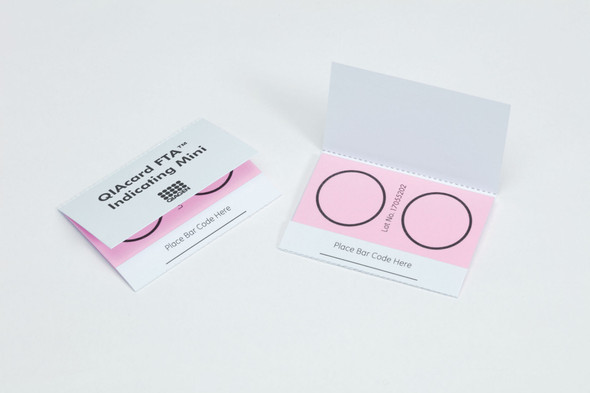
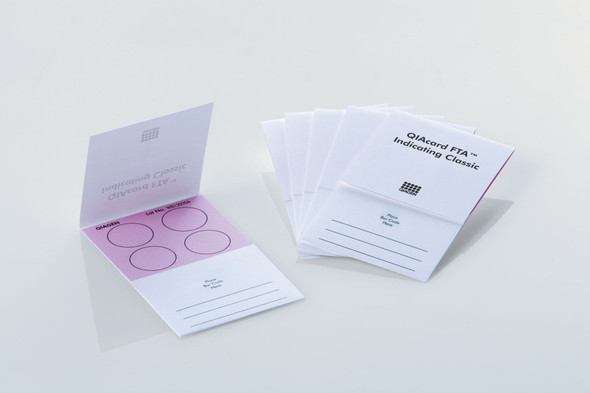
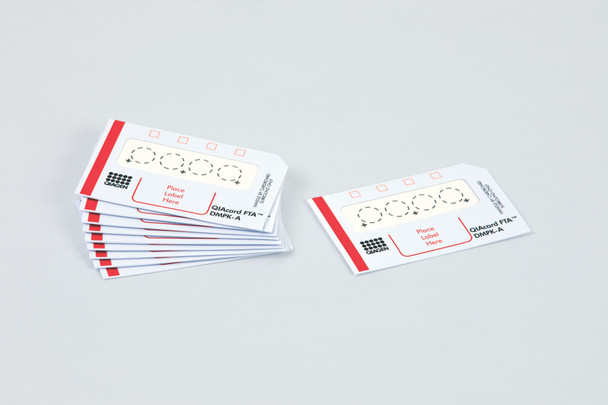
The Qiagen QIAcard FTA DMPK Card turns drug metabolism and pharmacokinetic sampling into a dried blood spot workflow that needs only 10 to 20 µL per sample. Spots dry on the card and stay stable at room temperature, so studies ship samples without dry ice and sample serially from the same animal.
- Microvolume Sampling – Each spot takes 10 to 20 µL, enabling serial sampling from individual animals.
- Three Card Chemistries – DMPK-A, DMPK-B and DMPK-C formats let the card match the analyte and extraction solvent.
- Room Temperature Stability – Dried spots ship and store without dry ice, which cuts study logistics cost.
About This FTA DMPK Card
Drug metabolism and pharmacokinetic studies need many time points, and plasma workflows answer with centrifugation, isolation and cleanup at every one. The DMPK three-step dried spot procedure is more straightforward, and the smaller volumes mean more serial sampling from each animal and less reliance on composite data. Blood is the primary sample, and the cards also work with colorless fluids such as plasma, cerebrospinal fluid and urine.
Analysis runs primarily by HPLC or UHPLC with MS/MS detection, or by direct desorption techniques such as DESI. On-substrate cleanup conveys greater analyte stability, especially for enzyme-sensitive compounds, per the manufacturer. Choosing between the A, B and C formats depends on the analyte structure, the extraction solvent and the analysis workflow.
Features and Benefits
Study Design
- Serial Sampling – Microvolumes allow repeated samples from one animal, which strengthens time course data.
- Analyte Stability – On-substrate cleanup protects enzyme-sensitive compounds better than liquid handling.
Laboratory Workflow
- MS Ready – Spots feed HPLC or UHPLC with MS/MS detection and direct desorption MS techniques.
- Solvent Flexibility – Methanol, aqueous and organic mixtures and aqueous buffers are all documented extraction routes.
Product Specifications
Product Details
- Manufacturer: Qiagen
- Format: QIAcard FTA DMPK-A, DMPK-B or DMPK-C
- Sample Volume: 10 to 20 µL per sample
- Sample Types: Blood, plasma, urine, synovial fluid and cerebrospinal fluid
- Analysis: HPLC or UHPLC with MS/MS, direct desorption MS
- Long-Term Storage: Room temperature
- Intended Use: Molecular biology and drug development research applications
Packaging
- Options: 100 cards per pack, one card type per pack
- Storage: Store at room temperature
Browse related categories: blood collection supplies and Qiagen products.
Why Choose This DMPK Card
DMPK and PK programs spend heavily on animal numbers, sample handling and dry ice, and all three shrink when the sample is a dried microvolume spot. These cards were designed for that study economics, not adapted from a DNA workflow.
- Fewer Animals per Study – Serial sampling from individual animals replaces composite designs that consume more subjects.
- Simpler Logistics – Room temperature spots remove dry ice shipments and plasma processing from the study plan.
- Three Matched Chemistries – A, B and C formats let the card follow the analyte and solvent, a differentiator over single-chemistry spot papers.
Manuals and Troubleshooting Guides
Frequently Asked Questions
What is the difference between DMPK-A, B and C?
The three formats carry different card chemistries for different analytes and extraction solvents. The manufacturer advises choosing by analyte structure, solvent and workflow, and the product sheet compares them.
How much sample does each spot need?
Each sample takes 10 to 20 µL. That microvolume is what enables serial sampling from individual animals.
What samples can be spotted?
Blood is the primary sample. Plasma, urine, synovial fluid and cerebrospinal fluid are also listed by the manufacturer.
How are spots analyzed?
HPLC or UHPLC followed by MS/MS detection is the primary route. Direct desorption techniques such as DESI are also documented.
Do the samples need dry ice?
No, dried spots are stable at room temperature, which the manufacturer highlights as a cost saving. That also allows remote sampling away from the laboratory.
Are these cards for clinical diagnosis?
No, they support drug development research workflows. They are not intended for the diagnosis, prevention or treatment of disease.